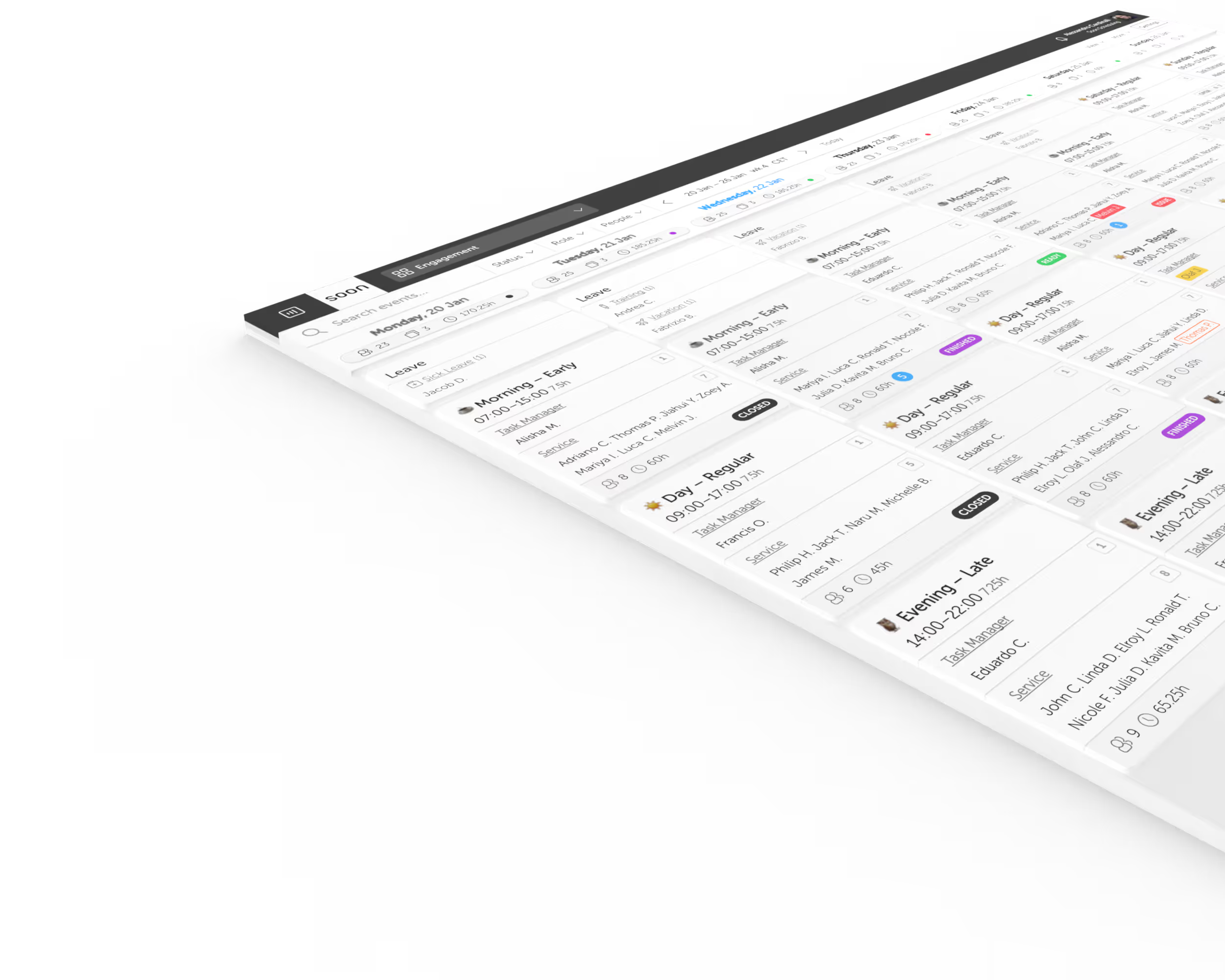
Theme park and attractions scheduling, planned position by position.
Rides, food and beverage, merchandise, entertainment, park services, and maintenance all run on rotation inside the shift. Intrashift scheduling decides which position each person holds, when they rotate, and who relieves whom, then re-solves when the weather turns or somebody calls in.
Start Free TrialChallenges we solve
A full roster still does not tell you the park will run
A shift roster names who is on site from nine to five. It stays silent on who holds the dispatch console at 13:15, who relieves them, and how long the walk between those two positions takes.
Weather closes an attraction and the labour has nowhere to go
When an outdoor attraction shuts, its team is surplus within minutes while guest-facing positions get busier, because every guest in the area now has a question. The redeploy runs in both directions at once.
Costume and outdoor positions cannot wait for the hour mark
A 45 to 60 minute house standard is the wrong interval inside a full character costume in August. Those positions need 15 to 30 minutes, which triples the handoffs required to cover the same hour.
Certification decides whether the attraction opens at all
Safety-critical positions need a currently certified operator or the attraction stays closed. Certificates carry expiry dates, so who is eligible for a position changes on a date the daily plan has to know.
Six venue types, one problem inside the shift
Rides and attractions
Greeter, queue line, grouper, load platform, dispatch console. The order is fixed and some links are certification gated, so eligibility has to be checked before a position is offered rather than after someone arrives.
Food and beverage outlets
Front counter, expo, grill, prep, and dish rotate on fatigue as much as on demand. Food handling certificates and allergen stations narrow the pool further, so the rotation is never a simple round robin.
Merchandise locations
Register, floor, stockroom, and fitting areas. Nobody wants eight straight hours on a till, and merchandise is where variety across the shift is easiest to lose and most worth protecting.
Entertainment and character operations
Costume work sets the tightest intervals on site. What drives them is core temperature inside the suit, not the ambient reading, so the standard block used everywhere else is the wrong unit here.
Park services and custodial
Routes rather than fixed posts, which makes travel the dominant variable. A rotation built without walk times sends people across the site and quietly spends part of every interval in transit.
Maintenance
Planned work interleaves with call-outs and downtime. Maintenance is the team most often pulled across cost centres, and the one whose availability sets how quickly a closed attraction reopens.
What moves the plan on the day
Weather closures redeploy in two directions
Closing an outdoor attraction frees a team and creates demand at the same moment. Greeters and guest services need more people during a closure, not fewer, because guests arrive asking what is still open.
Cross cost centre movement
Someone homed to one area may work three locations in a day. Skills should decide where they can go. A plan that follows only the org chart leaves people idle in one area while another runs short.
Peak days and seasonal swings
A shoulder-season Tuesday and a school-holiday Saturday are different operations sharing one position map. Sizing the day ahead of time keeps live changes down to exceptions instead of a full rebuild.
Walk time between positions
Ten to fifteen minutes from a base to the next assignment is ten to fifteen minutes of paid labour. Left out of the plan, it arrives late at the next position and the delay travels down the chain.
The handoff is the communication channel
Most frontline staff carry no phone on shift, and at some operators a phone on the floor is a disciplinary matter. A rotation has to survive being posted on a wall and spoken aloud in one sentence.
Quality of work life is an operating goal
Variety across a shift is not a perk. It is a large part of why seasonal staff come back, so a rotation that hands the same person the same post every day is a retention problem before it is a fairness one.
How each rotation gets decided
Rules that cannot bend
Statutory rest and meal windows, limits on minors, union contract terms covering break windows and preferred positions, and maximum continuous exposure for heat, cold, and full costume work.
Rules you would like to hold
Variety across the shift, proximity to a home area, stated preferences, even distribution of the posts nobody volunteers for, and keeping trainees within sight of whoever is signing them off.
Gated positions and merely preferred ones
A dispatch console needs a certified operator or it stays closed. A merchandise till would rather have someone experienced and will cope without. Knowing which is which is what keeps a short-staffed day open.
Re-solving with the smallest possible change
A large operation can re-solve hundreds of times a day. Every changed line has to reach a person through a lead or a relief, so churning a whole area to cover one absence costs more than it saves.
Plan the positions, not just the shifts
Build the rotation your area actually runs, with certifications, exposure limits, walk time, and relief chains in the same plan.
Try Soon freePlan the operation, not just the rota
Continue with practical guides, calculators, and workforce concepts for theme parks and attractions teams.
Product
Intrashift scheduling
Intrashift scheduling plans which position each person holds, when they rotate, and who relieves whom inside a shift that already exists.
Glossary
Bump scheduling
A bump is the relief handoff attractions teams run all day, and it is a different thing from the seniority bumping rights that appear in layoff language.
Glossary
Staggered relief
One relief walking in moves four people, and the chain cascades rather than swapping in unison because each step costs time on foot.
Glossary
Walk time
Getting from a base to the next assignment can take 10 to 15 minutes on a large site, which makes walk time a scheduling variable rather than an afterthought.
Product
Demand forecasting
Forecasting sizes a peak Saturday against a quiet Tuesday so the rotation starts from the right headcount instead of being rescued live.
Reference
Scheduling laws
Break timing, rest, and rules for minors vary by jurisdiction, and the scheduling laws reference sets out which of them are statutory where you operate.
Frequently asked questions
What is intrashift scheduling in a theme park?
Intrashift scheduling is the planning of work inside a shift: which position each person occupies, when they rotate to the next one, and who relieves whom. Shift scheduling decides that a ride operator works nine to five. Intrashift scheduling decides that they are on the load platform until 13:05, the dispatch console until 14:00, and the queue line after that. It is also written intra-shift scheduling, and the two mean the same thing.
What is a bump rotation in attractions?
A bump is the handoff that moves someone from one position to the next. A relief worker walks up, says they are there to relieve you and tells you where you are going, and you walk to that position, displacing whoever is there. Because every move costs walk time, the chain runs staggered rather than as a synchronised swap. In union contexts the word bumping usually means something different, namely the seniority right to displace a less senior worker during a layoff. Both senses are real, and attractions teams use the operational one.
How often should theme park staff rotate positions?
Most operations settle on 45 to 60 minutes for standard indoor positions, which keeps attention up without putting the whole site permanently in motion. Outdoor positions in heat or cold, and any work in full costume, commonly tighten to 15 to 30 minutes. The interval should come out of your exposure policy, contract, and local law rather than a number typed into a template, because the same person can need a 60 minute block indoors and a 20 minute block outdoors an hour later.
What happens to staff when weather closes an outdoor attraction?
The labour does not go home, it has to land somewhere useful, often in a different cost centre with different certification requirements. The counterintuitive part is that a closure increases demand at some positions rather than reducing it. Greeters, guest services, and entrance positions get busier during a closure because guests come asking what is still open, when the attraction will reopen, and what to do in the meantime. A redeploy that only sheds people misses half the problem.
How should costume and character rotations be handled?
Full costume work is set by core temperature inside the suit, which rises long before ambient conditions look dangerous, so it needs far shorter intervals than the rest of the site. Fifteen to thirty minutes is common in summer. Tightening from 60 minutes to 20 triples the number of handoffs needed to cover the same hour, so a costume policy is a staffing decision as much as a safety one. Costed properly, it holds on the hottest afternoon of the year, which is exactly when it matters.
How do certifications affect the daily rotation?
Positions carry requirements, and the useful distinction is between the ones that stop the operation and the ones that only make it worse. A ride dispatch console needs a certified operator or the attraction cannot run. A merchandise till would rather have someone experienced and will survive an hour without. Certificates also expire, so a person drops out of the eligible pool for a position on a known date, and the plan should surface that early enough for refresher training to be scheduled.
Can one person work several areas or cost centres in a day?
Yes, and at large venues it is normal. Someone homed to one area may legitimately work three locations across a single shift. What decides where they can go is skills and certification, not the reporting line. A rotation that respects only the org chart leaves capacity stranded in a quiet area while another runs short, and cost centre reporting still works if each assignment records where the hours were actually worked.
How do you communicate rotations to staff who do not carry phones?
Around nine in ten frontline staff at large venues have no phone on them during a shift, and at some operators being seen with one on the floor is a disciplinary matter. That rules out notification-based scheduling. What works is a break-room display board showing the current rotation, printed slips at shift start, radio to area leads who push changes into the chain by hand, and the handoff itself, where the relief says out loud where you are going next.
How do peak days and seasonal swings change the plan?
The position map stays roughly the same while the headcount behind it moves by a large multiple between a shoulder-season weekday and a school-holiday Saturday. Peak days open positions that are dark the rest of the year and shorten every rotation interval because queues and heat both rise. Sizing the day in advance keeps the live work down to genuine exceptions rather than rebuilding each area from scratch at opening.
Is this different from shift scheduling software?
Yes, and they sit in layers rather than competing. Shift scheduling decides who is rostered and whether the roster is legal and affordable. Intrashift scheduling takes that roster as its input and plans the positions inside it, including relief chains, walk time, exposure limits, and certification gating. If your existing system already produces a clean daily roster for the park, that roster is the starting point rather than something to replace.
Comparing scheduling software for Theme Parks and Attractions?
See how Soon compares with the scheduling tools teams in this industry most often shortlist, including the rows where the other product wins.
Your next schedule could take 2 minutes.
Import your team, set your rules, hit auto-fill. Most teams are live the same day.
30 days free · No credit card required
Already have an account?Sign in