Skip to content
Buyer guide ยท Updated June 2026

The best AI shift scheduling software in 2026

Soon is the strongest fit for most teams comparing AI shift scheduling software because it pairs rule-based auto-scheduling with a natural-language assistant for intraday coverage decisions. Deputy, Connecteam, and Homebase work for simpler or compliance-heavy hourly teams. UKG fits enterprise planning at scale.

What counts as AI shift scheduling?

Buyers use AI shift scheduling software to mean anything from basic auto-fill to natural-language assistants that help managers fix coverage during the day. The useful distinction is whether the tool only builds the first draft of the week, or also helps after publication when availability, absences, and demand change.

The strongest AI scheduling tools combine rule-based auto-scheduling, natural-language scheduling commands, and enough operational visibility to trust the result. For a broader category view, see our guide to the best employee scheduling software.

AI shift scheduling software compared

Pricing changes often. Feature depth matters more than marketing labels. Use this table to compare automation, intraday AI support, and forecasting before reading the full reviews below.

Criteria Soon Deputy Connecteam Homebase When I Work UKG (Kronos)
Natural-language scheduling assistant Strong Limited Moderate Basic Limited Moderate
Rule-based auto-scheduling Advanced Moderate Basic Basic Basic Advanced
Intraday AI support Strong Basic Basic Basic Limited Moderate
Demand forecasting Strong Moderate Basic Basic Limited Advanced
Setup effort Fast Moderate Fast Fast Fast Heavy

Full reviews

1

Soon

AI planning platform

Best for AI-assisted scheduling with real operational control

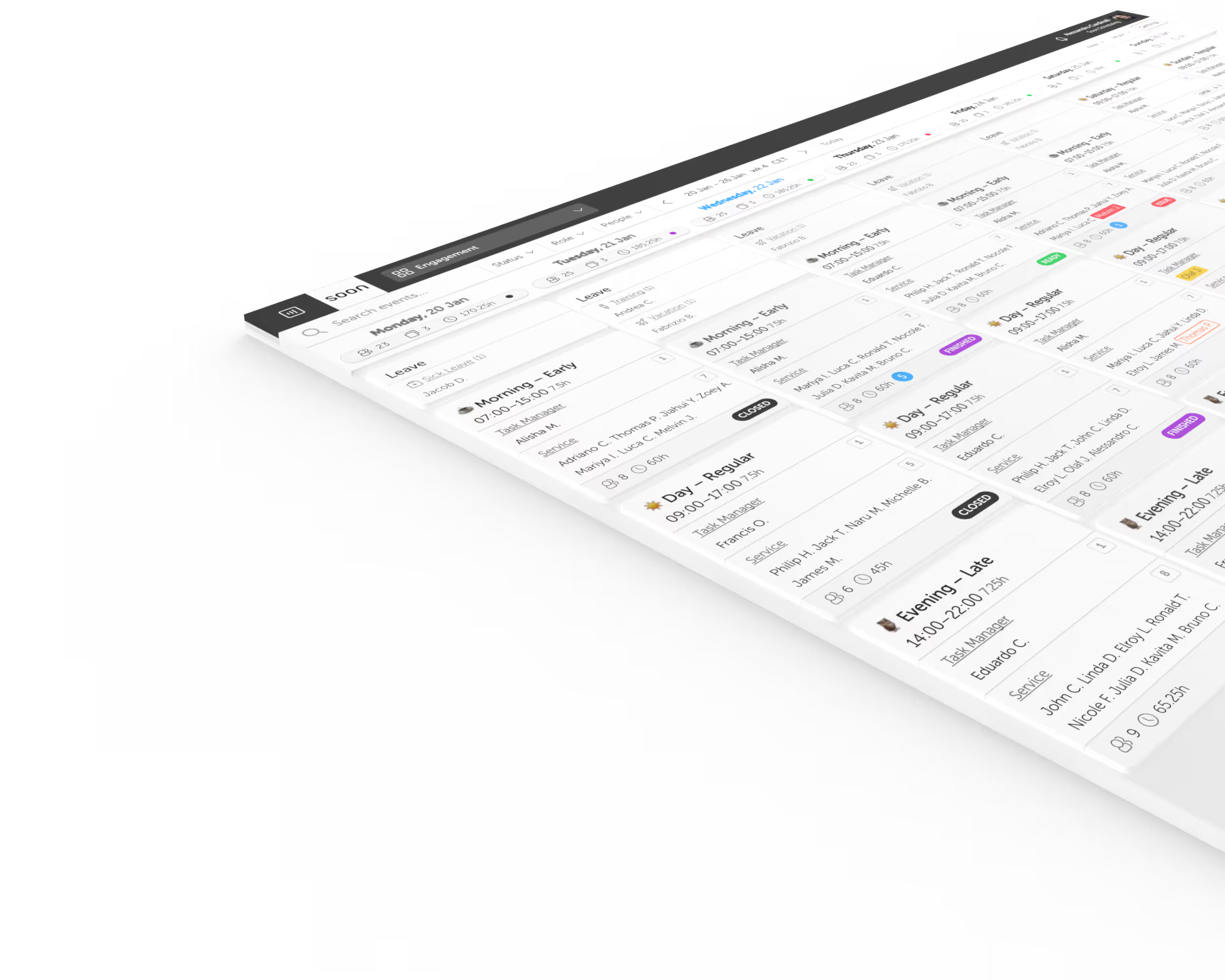
Soon combines rule-based auto-scheduling with a natural-language AI assistant for intraday changes, shift framework generation, and workforce insights. It is the strongest fit when AI needs to reduce manager admin after shifts are published, not just fill a weekly rota faster.

Choose Soon if

  • You want AI to help with live coverage decisions, not only initial schedule building
  • Managers need plain-language commands for intraday scheduling changes
  • You want automation plus forecasting without enterprise WFM overhead

Look elsewhere if

  • You only need a very basic rota with no automation
  • You are buying primarily for payroll or time clocks
2

Deputy

Shift scheduling app

Best when labor compliance and time tracking stay central

Deputy offers auto-scheduling with labor rules and strong time-tracking adjacency. Its AI scheduling depth is lighter than dedicated planning platforms, but it remains a credible option for hourly teams where compliance guardrails matter as much as automation.

Choose Deputy if

  • Break rules, overtime exposure, and time tracking need to stay tied to scheduling
  • You run an hourly operation with tighter labor controls

Look elsewhere if

  • You need deeper planning within shifts or stronger intraday AI workflows
  • Forecasting and activity-level coverage are core requirements
Read the full Soon vs Deputy comparison
3

Connecteam

Frontline operations app

Best for all-in-one frontline ops with light AI scheduling

Connecteam bundles scheduling with communication, forms, and training for deskless teams. AI features exist across the platform, but scheduling automation is not as deep as tools built specifically for workforce planning.

Choose Connecteam if

  • You want one app for scheduling, chat, and frontline workflows
  • Scheduling complexity is still relatively simple

Look elsewhere if

  • Scheduling rules, forecasting, or intraday coverage are the main pain
  • You need a dedicated AI scheduling assistant for live operational changes
4

Homebase

Shift scheduling app

Best for small retail teams wanting scheduling plus payroll admin

Homebase is convenient when scheduling sits beside timesheets and payroll-related admin for a small location. AI scheduling depth is limited compared with platforms built around automation and intraday control.

Choose Homebase if

  • You want scheduling and payroll-adjacent admin in one familiar tool
  • Your team is small and scheduling rules are still simple

Look elsewhere if

  • Automation, forecasting, or intraday visibility are becoming weekly problems
  • Managers spend more time fixing the schedule than running operations
Read the full Soon vs Homebase comparison
5

When I Work

Shift scheduling app

Best for teams that want simple scheduling first

When I Work is approachable for teams leaving spreadsheets, but its AI and automation depth is intentionally limited. It fits simple environments more than teams trying to use AI for richer scheduling logic.

Choose When I Work if

  • Ease of use matters more than AI depth
  • You have a small team with straightforward rotas

Look elsewhere if

  • You expect scheduling complexity to grow in the next year
  • You want AI to help with rules, forecasting, or intraday coverage
Read the full Soon vs When I Work comparison
6

UKG (Kronos)

Enterprise WFM suite

Best for enterprise workforce planning at scale

UKG offers enterprise-grade workforce management with optimization engines and formal planning workflows. It is powerful at scale, but rollout time and process overhead are far heavier than modern AI scheduling platforms.

Choose UKG (Kronos) if

  • You need a full enterprise WFM suite across a large organization
  • Formal workforce planning and deep payroll integration are required

Look elsewhere if

  • You want to go live in days, not months
  • Scheduling is the primary problem and you do not need a full HCM stack
Read the full Soon vs UKG (Kronos) comparison

Frequently asked questions

What is the best AI shift scheduling software?
For teams that need both automation and live operational control, Soon is the strongest fit because it combines rule-based auto-scheduling with a natural-language AI assistant for intraday changes. Deputy works well when labor compliance matters most. When I Work and Homebase fit simpler environments. UKG serves large enterprises with formal workforce planning.
What does AI scheduling software actually do?
AI scheduling software uses automation and machine learning to build schedules faster, apply rules consistently, suggest coverage fixes, and help managers make intraday changes with less manual work. The best tools go beyond auto-fill and support live operational decisions after shifts are published.
Is AI shift scheduling only for large teams?
No. Small and mid-sized teams often benefit most because managers still carry scheduling manually. AI becomes valuable once availability changes, leave, swaps, and coverage gaps create recurring weekly admin.
How is AI scheduling different from basic auto-scheduling?
Basic auto-scheduling fills open shifts from templates or simple rules. AI scheduling adds smarter constraint handling, demand-based suggestions, natural-language commands, and support for changes during the day when the plan shifts under you.
Does Soon use AI to replace managers?
No. Soon uses AI to reduce repetitive scheduling work and speed up operational decisions. Managers stay in control with previews, approvals, and undo options before changes apply.
Can AI scheduling software integrate with Google Calendar or Outlook?
Yes. Soon offers real-time two-way sync with Google Calendar and Outlook. See our comparison of shift schedulers with calendar sync for how other tools handle feeds versus live sync.
When should a team move from a simple scheduler to AI scheduling software?
When managers spend hours fixing schedules each week, when rules and coverage are hard to enforce manually, or when intraday changes outpace what a basic rota tool can support. Those are the signals that AI scheduling starts paying back.
How much does AI shift scheduling software cost?
Pricing varies by depth. Simple schedulers start at a few dollars per user per month. Platforms like Soon and Deputy use per-user pricing and are best evaluated on time saved and scheduling depth, not entry price alone. Enterprise suites like UKG require custom quotes.

Evaluating broader scheduling needs? Start with employee scheduling software, auto-scheduling, or calendar sync comparison.

Your next schedule could take 2 minutes.

Import your team, set your rules, hit auto-fill. Most teams are live the same day.

Try Soon free

30 days free ยท No credit card required

Already have an account? Sign in