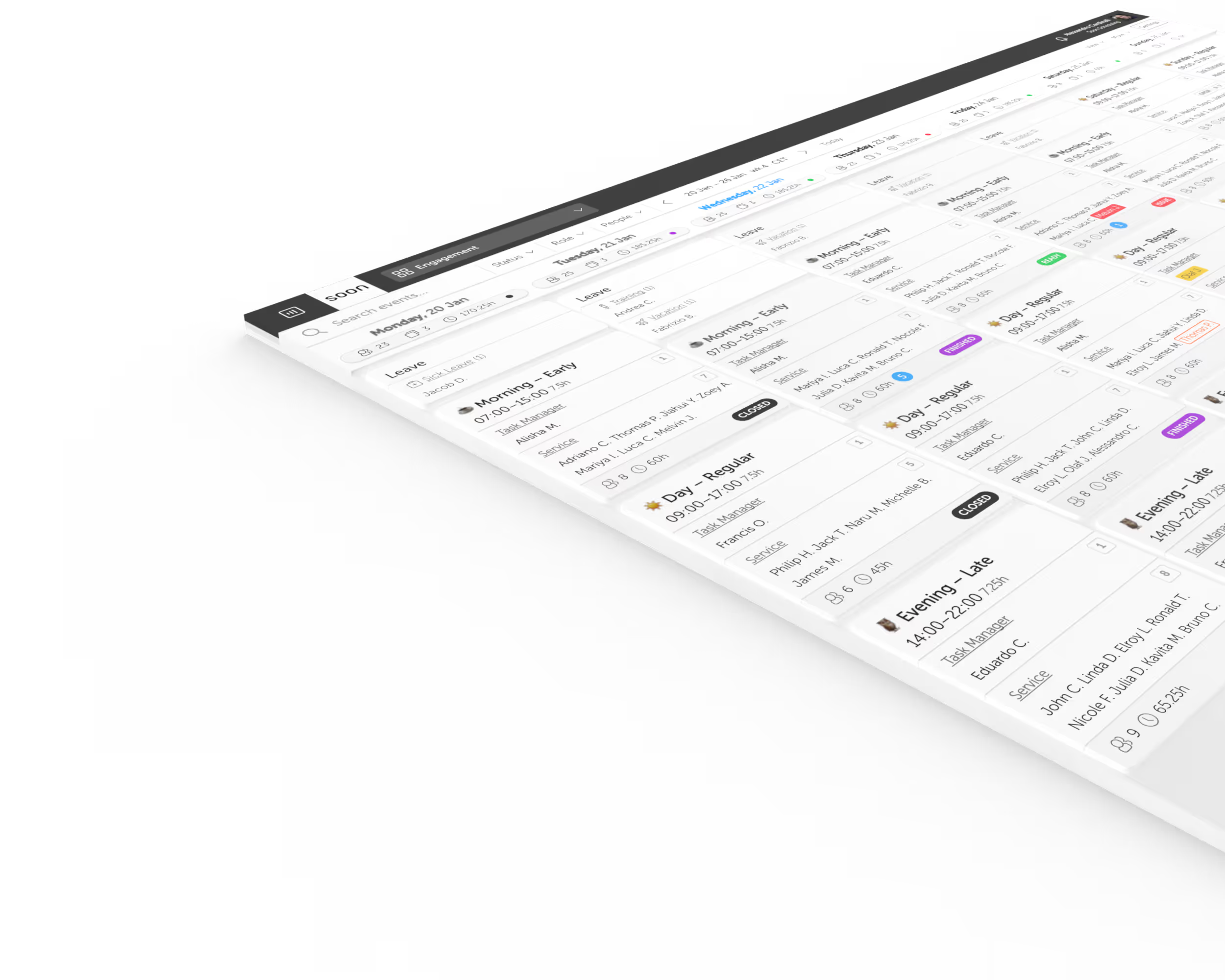
Soon vs Excel for Shift Scheduling
Excel is free and familiar, but it breaks at scale. Soon gives you the automation, compliance, and visibility that spreadsheets can't.
| Feature | Soon | Excel |
|---|---|---|
| Time to go live | Under 1 day | Immediate but fragile |
| Auto-scheduling | AI-powered, generates in seconds | Manual formulas, hours of work |
| Intraday changes | Real-time drag-and-drop with conflict checks | Copy-paste, no validation |
| Employee self-service | Full: shift swaps, availability, time-off requests | None |
| Version control | Built-in audit trail, full change history | Manual file naming, no rollback |
| Mobile access | PWA works on any device | Not designed for mobile |
| Labor rule compliance | Automatic enforcement of rest, max hours, certifications | Manual checking, error-prone |
| Multi-location support | Unified view across all locations | Separate files per location |
| Notifications | Automatic push, email, Slack alerts | Manual distribution via email |
| Demand forecasting | Historical pattern analysis, AI suggestions | Not available |
| Reporting | Built-in dashboards: hours, costs, coverage | Manual pivot tables |
| Collaboration | Real-time multi-user editing | File locking, merge conflicts |
The verdict
Soon replaces Excel shift scheduling with automated assignment, real-time intraday management, and employee self-service. It goes live in under a day and eliminates the manual copy-paste workflows that make spreadsheet scheduling fragile at scale.
Try Soon FreeFrequently asked questions
Why switch from Excel to Soon?
Excel lacks automation, real-time updates, and employee self-service. As your team grows, manual scheduling becomes a bottleneck that costs more in labor hours than a dedicated tool. Teams typically save 5 to 10 hours per week by switching.
Can I import my existing Excel schedules?
Yes. Soon supports CSV import so you can bring your existing schedule data and employee lists. Most teams migrate their full history in under an hour.
Is Soon more expensive than Excel?
Excel is free to use, but the hidden cost is the time your team spends on manual scheduling. When you factor in scheduling errors, last-minute scrambles, and overtime from poor planning, the true cost of Excel is significantly higher.
How long does it take to set up Soon?
Most teams are up and running in under a day. Import your employee data, configure your shift templates and rules, and let Soon auto-fill your first schedule.
What happens when someone calls in sick with Excel vs Soon?
With Excel, you manually search for available replacements, check their hours, and hope you do not violate any rules. With Soon, you click the open shift and see qualified, available replacements ranked by fit. One click fills the gap.
Can multiple people edit the schedule at the same time?
In Excel, simultaneous editing leads to conflicts and overwritten changes. Soon supports real-time collaboration where multiple planners can work on the same schedule without conflicts.
How does Soon handle compliance that Excel cannot?
Soon automatically enforces rest periods between shifts, maximum working hours per week, required certifications for specific roles, and contract hour limits. In Excel, all of this requires manual checking.
Do employees need to install an app?
No. Soon is a progressive web app that works in any browser. Employees can view their schedule, request time off, and swap shifts from their phone without installing anything.
More comparisons
Need the wider field? Read our guides to the best employee scheduling software and best AI shift scheduling software.
How does the switching process work?
Switch from Excel to Soon with confidence.
There are multiple ways to move from Excel to Soon. You can transition at your own pace, or reach out so we can help with your migration.
- 01
Create your Soon workspace
Sign up and create your first team. It takes less than two minutes and no credit card is needed.
- 02
Import your team
Add your employees manually or import them from a CSV file. Set roles, skills, and contract hours.
- 03
Set your scheduling rules
Define shift templates, coverage requirements, rest period rules, and any constraints your team needs.
- 04
Run a pilot alongside your current tool(optional)
Most teams run a 1 to 2 week pilot with one team before rolling out to the full organization.
- 05
Go live
Publish your first schedule and invite your team. Our support team is available if you need help along the way.
Your next schedule could take 2 minutes.
Import your team, set your rules, hit auto-fill. Most teams are live the same day.
30 days free · No credit card required
Already have an account?Sign in