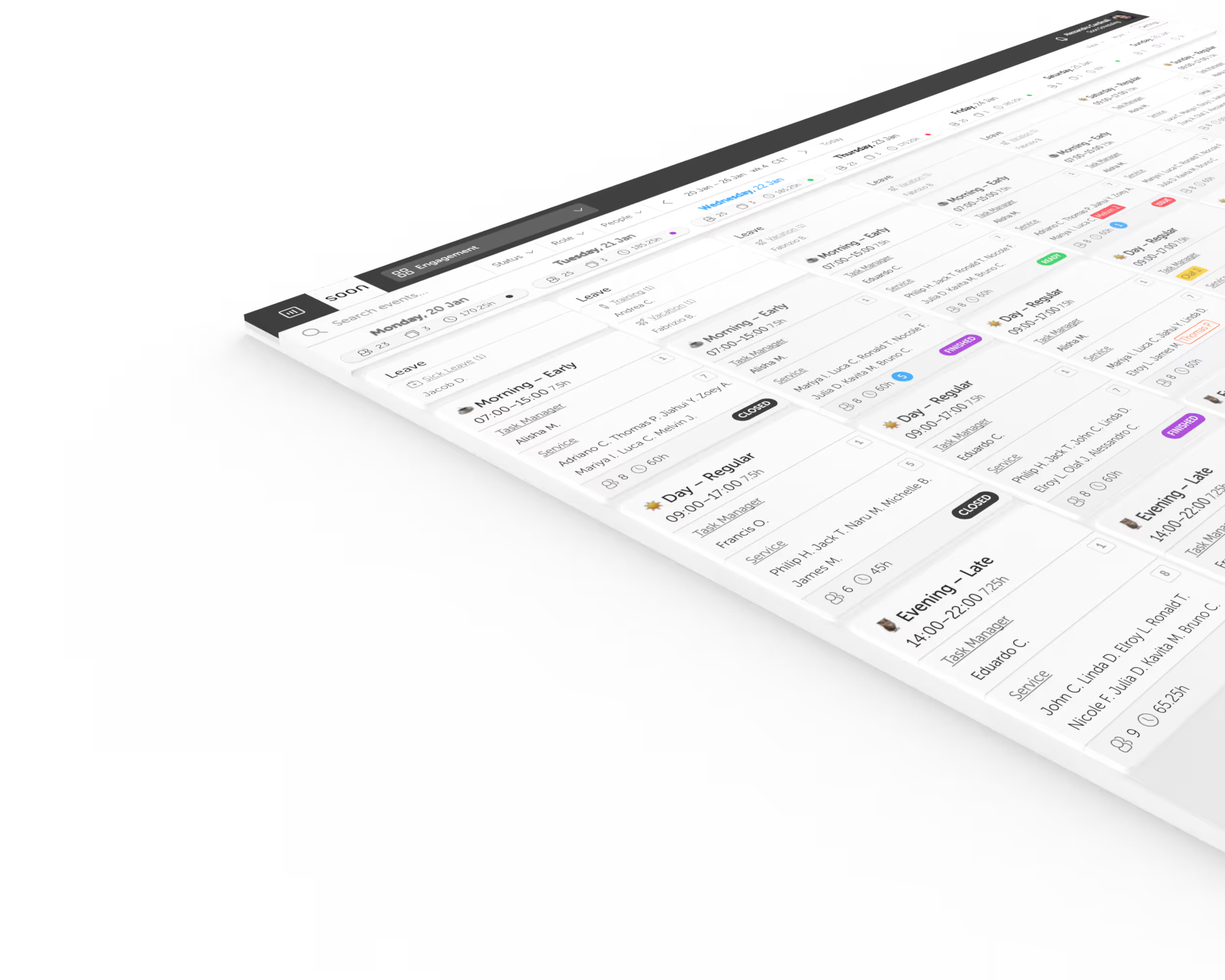
Intraday operations
Soon
Best when forecasting, staffing requirements, shifts, activities, and live coverage must stay in one planning flow.
Buyer guide, updated October 2026
Employee scheduling software (also called shift scheduling software) builds and publishes who works when, then handles availability, swaps and time off. Compare demand forecasting, auto-scheduling, mobile access and the use case each product fits best.
Not here to compare? See our own employee scheduling software.
Soon publishes this guide and is one of the products in it. We checked official product pages, pricing pages, help documentation, and current verified customer review sources. Prices and sources were last checked on .
The best choice depends on what makes your schedule difficult. A small shop needs a different product from a multi-location restaurant, a mobile field team, or an operation that plans work at 15-minute intervals.
Intraday operations
Best when forecasting, staffing requirements, shifts, activities, and live coverage must stay in one planning flow.
Small business
The clearest free starting point for one small retail or service location.
Restaurants
Restaurant-specific scheduling, communication, labor, and integration workflows.
Deskless teams
Mobile scheduling combined with tasks, forms, time tracking, and frontline communication.
Automation value
Automatic scheduling starts at a clear $4 per user each month.
This table uses exact plan gates instead of subjective labels such as basic or advanced. Prices are public list prices in USD unless another currency is shown. Annual discounts are identified where relevant.
| Product | Best for | Starting price | Demand forecasting | Auto-scheduling | Mobile access | Important limit |
|---|---|---|---|---|---|---|
| Soon Workforce planning and intraday scheduling platform | Staffing requirements, complex shifts, and intraday activity scheduling | From $4/user/month, billed annually | Built-in workload forecasting (Scale), feeding staffing requirements | Shifts from Grow; activities on Scale | Installable web app on mobile, tablet, and desktop | More product than a small team needs if it only wants to publish a simple weekly rota. |
| Deputy Workforce management app | Compliance, labor forecasting, and time tracking | From $5/user/month | Forecast labor demand (Core) | Yes, from Core | Web, iOS, and Android | Advanced scheduling and forecasting require Core, and a minimum monthly spend applies. |
| Connecteam Deskless workforce platform | Mobile deskless teams that also need tasks and time tracking | Free for teams with up to 10 users | Not documented | Auto-assign on Expert | Web, iOS, and Android | Advanced scheduling is gated by higher plans, and costs can increase when a team needs several product hubs. |
| Homebase Small business workforce app | Small retail and service teams that want scheduling plus payroll | Free for one location and up to 10 employees | Forecast sales and labor (Historical and POS data) | AI assistant on Plus | Web, iOS, and Android | Per-location pricing becomes less attractive as the number of locations increases. |
| When I Work Shift scheduling app | Easy schedules, open shifts, and employee-led coverage | From $2.50/user/month | Enter forecast inputs (Sales or labor budget) | Yes, on Essentials | Web, iOS, and Android | Advanced scheduling rules, custom reports, and role permissions require Pro. |
| Planday Workforce management platform | Multi-department and multi-location shift operations | From £2.99/user/month in the UK | Enter a revenue forecast (Plus and above) | Yes, on custom Pro | Web, iOS, iPadOS, and Android | Auto-scheduling is not available on the public entry plans, and regional prices differ. |
| 7shifts Restaurant scheduling platform | Restaurants that want scheduling, labor tools, and team communication | Free for one location and up to 20 employees | Use sales forecasts (POS and historical data) | Labor recommendations and scheduling tools | Web, iOS, and Android | Its restaurant focus is a poor match for general office, healthcare, or service operations. |
| Sling Shift scheduling app | Budget-conscious teams that need a useful free scheduler | Free for up to 30 users | Not documented | Auto-assign on Business | Web, iOS, and Android | Auto-assign is limited to Business and works from shifts that managers create first. |
| Workfeed Automated scheduling app | Low-cost automatic scheduling for small and mid-sized teams | Free for the first 500 published shifts | AI demand forecasts (Pro+) | Yes, from Pro | Web, iOS, and Android | The free allowance is a lifetime limit of 500 published shifts, not a permanent unlimited free plan. |
| Microsoft Shifts Included Teams scheduling app | Teams-first organizations with straightforward scheduling needs | Included with an eligible Microsoft Teams license | Not documented | No native schedule generator documented | Teams desktop, web, iOS, and Android | Guests cannot use schedules, and managers use desktop or web for schedule creation and publishing. |
Prices can change. Confirm taxes, minimum charges, user definitions, and regional prices with the vendor before purchase.
Automation map
Auto-scheduling can mean assigning people to shifts that a manager already created. It can also mean turning forecasted demand into staffing requirements, shifts, activities, and live coverage. Select a linked capability to check the vendor's own source.
Official product, pricing, and help sources checked August 10, 2026. “No public feature found” means we could not verify a native capability for that stage in the vendor's public materials. It does not exclude custom services or third-party integrations.
Research method
We selected products that appear repeatedly in current employee-scheduling research, serve a distinct buyer need, or are common alternatives for Soon customers. We replaced enterprise WFM suites with employee-scheduling products that are closer to the main search intent.
We checked each vendor's official pricing, product pages, and help documentation. We used current verified customer reviews as supporting evidence for usability themes. Vendor claims remain vendor claims unless a customer source or independent test supports them.
Schedule creation and changes
Availability, leave, swaps, and open shifts
Auto-scheduling rules and plan gates
Mobile manager and employee access
Labor cost and forecasting tools
Payroll, POS, and API integrations
Multi-location and department support
Full price, minimum charges, and trial terms
These products are not ranked from best to worst. Each review explains the use case, price gate, strengths, and limits that distinguish the product.
Best for staffing requirements, complex shifts, and intraday activity scheduling
Starting price
From $4/user/month, billed annually
Auto-scheduling
Shifts from Grow; activities on Scale
Mobile
Installable web app on mobile, tablet, and desktop
Trial
14 to 60 days, based on plan
Soon is the most suitable option in this guide for operations teams that must turn demand into staffing requirements, assign people to shifts, and plan what they do during each shift. Forecasting, requirements, shifts, activities, and coverage stay in one clear planning flow. This is useful in customer support, healthcare, financial operations, and other environments where demand changes during the day.
Grow adds advanced shift auto-scheduling. Managers define staffing requirements, eligible employees, objectives, and constraints before Soon assigns people to shifts. Scale adds advanced auto-scheduling for activities within shifts, plus intraday coverage tracking. This gives Soon two connected automation layers instead of only filling open shifts.
Soon publishes this guide and is included in it. We therefore avoid calling Soon the best choice for every team. Homebase or Sling can be better for a small team that needs a low-cost rota. 7shifts is a clearer fit for a restaurant that wants restaurant-specific workflows.
Start has a $39 monthly minimum. Automated shift scheduling starts on Grow at $8/user/month annually or $10 monthly. Scale adds advanced auto-scheduling for activities within shifts.
Best for compliance, labor forecasting, and time tracking
Starting price
From $5/user/month
Auto-scheduling
Yes, from Core
Mobile
Web, iOS, and Android
Trial
Free trial available
Deputy is a strong option for hourly teams that need scheduling and time tracking in the same system. Its main value is not only fast rota creation. It also helps managers control breaks, overtime, wage costs, and labor rules.
The Lite plan covers the basic workflow. Buyers who need automated scheduling or demand forecasting must use Core. This plan gate matters when comparing Deputy with products that include automation in a lower-priced plan.
Deputy is a better fit than Soon when time clocking and payroll workflows are the central buying need. Soon is more suitable when the schedule must also control activities and coverage inside the working day.
Lite includes basic scheduling and time tracking. Core costs $6.50/user/month and adds auto-scheduling, demand forecasting, and labor optimization.
Best for mobile deskless teams that also need tasks and time tracking
Starting price
Free for teams with up to 10 users
Auto-scheduling
Auto-assign on Expert
Mobile
Web, iOS, and Android
Trial
14-day trial
Connecteam is built for employees who do not work at a desk. Its Operations Hub combines job scheduling with time tracking, forms, and tasks. This makes it useful for field service, construction, facilities, and distributed frontline teams.
The pricing model needs careful review. Basic scheduling is available on Operations Basic, but repeating shifts and templates start on Advanced. Automatic shift assignment requires Expert. Teams that also want the Communication and HR hubs can pay for several subscriptions.
Connecteam is a good choice when the mobile employee experience and all-in-one frontline management matter more than deep schedule optimization. Its large feature set can be more complex than a team needs if scheduling is the only problem.
Operations Basic starts at $29/month annually for the first 30 users. Auto-assign requires Operations Expert at $99/month annually.
Best for small retail and service teams that want scheduling plus payroll
Starting price
Free for one location and up to 10 employees
Auto-scheduling
AI assistant on Plus
Mobile
Web, iOS, and Android
Trial
Free plan available
Homebase is one of the clearest starting points for a small business. The free plan covers one location and up to 10 employees, with basic scheduling and time tracking. This makes it useful for teams leaving paper schedules or spreadsheets.
Essentials adds advanced scheduling, availability, time off, and employee shift trades. The AI-powered Scheduling Assistant is not part of the free or Essentials plans. It starts on Plus, which costs $70 per location each month before annual discounts.
Homebase is most compelling when scheduling, payroll, time tracking, and small-business HR must stay together. Teams with many locations or more complex scheduling rules should compare the total cost and automation limits carefully.
Essentials costs $30/location/month. The AI-powered Scheduling Assistant starts on Plus at $70/location/month.
Best for easy schedules, open shifts, and employee-led coverage
Starting price
From $2.50/user/month
Auto-scheduling
Yes, on Essentials
Mobile
Web, iOS, and Android
Trial
14-day trial
When I Work is a practical option for teams that want to build and share schedules without a long setup. It includes auto-scheduling, templates, team messaging, OpenShifts, and swaps on the entry plan.
The important dividing line is between Essentials and Pro. Teams with simple rules can stay on Essentials. Teams that need advanced rules, role permissions, custom reporting, labor sharing, or custom forecasting must use Pro.
The product fits small and mid-sized hourly teams that want employees to help resolve coverage through open shifts and swaps. It is less suitable when managers need detailed intraday planning or advanced schedule constraints.
Essentials includes auto-scheduling, templates, messaging, open shifts, and payroll integrations. Advanced rules and permissions start on Pro at $5/user/month.
Best for multi-department and multi-location shift operations
Starting price
From £2.99/user/month in the UK
Auto-scheduling
Yes, on custom Pro
Mobile
Web, iOS, iPadOS, and Android
Trial
30-day trial
Planday is designed for businesses that have several departments, teams, or locations. Managers can group schedules by department or employee and compare daily revenue with payroll costs.
Starter handles simple scheduling and time tracking. Plus is the more relevant plan for growing operations because it adds leave, payroll integrations, revenue reporting, employee records, and API access. Auto-scheduling is reserved for the custom Pro plan.
Planday is a strong candidate for hospitality, hotels, retail, and care organizations that need better multi-location control. Buyers who want transparent public pricing for automation should compare it with Deputy, When I Work, Workfeed, and Soon.
Starter covers basic scheduling and time tracking. Plus adds leave, payroll integrations, revenue reporting, and API access. Auto-scheduling is on the custom Pro plan.
Best for restaurants that want scheduling, labor tools, and team communication
Starting price
Free for one location and up to 20 employees
Auto-scheduling
Labor recommendations and scheduling tools
Mobile
Web, iOS, and Android
Trial
14-day trial
7shifts is the clearest specialist in this guide. Its product, pricing, integrations, and labor tools are designed around restaurant operations rather than general employee scheduling.
The free Comp plan supports one location and up to 20 employees. Entrée increases the limit to 30 employees and adds advanced scheduling and time tracking. The Works adds unlimited employees, budgeting, labor compliance, labor cost tools, and management reporting.
Restaurants should usually evaluate 7shifts even if they also review general products. Teams outside hospitality will often pay for restaurant-specific capabilities they do not need.
Entrée starts at $34.99/location/month. The Works starts at $76.99 and adds budgeting, labor compliance, cost tools, and unlimited employees.
Best for budget-conscious teams that need a useful free scheduler
Starting price
Free for up to 30 users
Auto-scheduling
Auto-assign on Business
Mobile
Web, iOS, and Android
Trial
Free plan and 15-day paid trial
Sling has one of the most useful free plans in the category. Teams with up to 30 users can create schedules, manage time off, publish available shifts, and communicate without paying for a subscription.
Premium adds mobile time tracking, labor costs, overtime tracking, and calendar sync. Business adds auto-assign, reports, PTO, sick callouts, and kiosk time tracking. Sling auto-assigns shifts that managers have already created, based on factors such as availability, time off, position, and location.
Sling is a good choice when price and basic scheduling matter most. Teams that need demand forecasting, detailed constraint control, or intraday planning should compare more advanced products.
Premium costs $2/user/month. Business costs $4/user/month and includes auto-assign, reports, PTO, and kiosk time tracking.
Best for low-cost automatic scheduling for small and mid-sized teams
Starting price
Free for the first 500 published shifts
Auto-scheduling
Yes, from Pro
Mobile
Web, iOS, and Android
Trial
14-day Pro+ trial
Workfeed is a credible value option for teams that want automatic scheduling without a high entry price. The Pro plan assigns employees based on availability, hours, roles, and other scheduling inputs.
The free Starter plan is useful for evaluation, but it stops after 500 published shifts. Basic removes that shift limit. Pro is the first plan with automatic scheduling. Pro+ is required for AI forecasting, advanced rule checking, overtime tracking, and API access.
Workfeed has less public review evidence than several larger products in this guide. Buyers should use the free trial to confirm that its automation, reports, and integrations fit their exact workflow.
Basic costs $3/user/month. Pro costs $4 and adds automatic scheduling, time clocking, leave, and integrations. Pro+ costs $5 and adds forecasting and advanced rules.
Best for teams-first organizations with straightforward scheduling needs
Starting price
Included with an eligible Microsoft Teams license
Auto-scheduling
No native schedule generator documented
Mobile
Teams desktop, web, iOS, and Android
Trial
Based on the Microsoft plan
Microsoft Shifts is a sensible starting point for organizations that already use Teams. Managers can create and publish schedules, add open shifts, and manage requests. Employees can view schedules, set availability, request time off, and offer or swap shifts.
The main benefit is convenience. There is no separate Shifts subscription when users already have eligible Teams licenses. The main limits are also clear in Microsoft documentation: guests cannot use schedules, and schedule creation is designed for desktop and web rather than the manager mobile workflow.
Microsoft does not document a native automatic schedule generator in Shifts. Teams that need constraint-based assignment, forecasting, or detailed coverage controls should compare a dedicated scheduling product.
Shifts has no separate subscription price. Every user needs an eligible Teams license.
A product can be useful without needing a full review in this guide. These products remain relevant, but they either overlap with a selected tool or serve a different search intent.
A capable scheduling and workforce app with modular features. We selected Workfeed because its public automation pricing is easier to compare.
A simple, low-friction scheduler. We selected Sling because its free plan covers a larger team and its plan limits are clearer.
A focused hourly scheduling product. It did not add a distinct use case beyond the simple schedulers in the main list.
A relevant option for forecasting and complex schedules. Its current buying path is less transparent than the selected products.
These are better evaluated as enterprise workforce management suites, not as general employee scheduling apps. Which UKG alternative fits depends on why you are leaving.
Start with the workflow that causes the most manual work. Then check the exact plan that solves it. If employees need shifts in a personal calendar, also compare Google Calendar and Outlook sync. A one-way calendar feed and a real two-way connection are not the same feature.
Compare Homebase, Sling, When I Work, and Microsoft Shifts.
Compare Soon, Deputy, When I Work, Connecteam, Planday, Sling, and Workfeed. Check the plan gate and the rules each engine uses.
Start with 7shifts, then compare Homebase, Deputy, Sling, and When I Work if you prefer a general product.
Start with Connecteam. Compare its combined hub price with the cost of separate scheduling, communication, and HR tools.
Compare Deputy, Planday, 7shifts, Homebase, and Workfeed Pro+. Confirm the rules supported in your country.
If you check every rule by hand, shortlist tools with automatic assignment and staffing requirements. Soon also has a Microsoft Teams app, so Teams users keep working where they are.
Check that each client can carry its own forecast, service level and staffing. Soon supports BPO and multi-client scheduling today; see the BPO scheduling guide linked below.
Compare Soon when managers must turn forecasts into staffing requirements, assign shifts, schedule activities within those shifts, and track live coverage.
Going deeper on automation? See how auto scheduling software fills shifts around your rules, how workload forecasting sets the demand side, and how BPOs handle scheduling for multiple clients.
Multiply the correct plan by all active users or locations. Add minimum monthly charges and any separate time tracking, payroll, communication, API, or enterprise modules. A low starting price is not useful if the required scheduling feature sits on a higher plan.
There is no single best product for every team. Soon fits operations that connect forecasting and staffing requirements with shift and intraday activity scheduling. Homebase is a strong free starting point for one small location. 7shifts is built for restaurants. Connecteam fits deskless teams. Deputy fits teams that put compliance and time tracking first.
Entry prices range from free plans to about $10 per user each month. Some products charge per user, while Homebase and 7shifts charge by location. Check which plan contains auto-scheduling, labor rules, integrations, and time tracking before you compare prices.
Homebase is free for one location and up to 10 employees. Sling is free for up to 30 users. Connecteam offers a free small-business plan for up to 10 users. Workfeed is free for the first 500 published shifts. Each free plan has different limits.
7shifts is the clearest restaurant-specific choice. It combines scheduling with restaurant labor tools, team communication, time clocking, and industry integrations. Homebase, Sling, Deputy, and When I Work are also relevant for restaurants that prefer a general workforce app.
Some products can assign employees to unfilled shifts. The rules and plan gates differ. Soon, Deputy, When I Work, Connecteam, Planday, Sling, and Workfeed offer forms of automated assignment. Microsoft Shifts does not document a native automatic schedule generator.
Microsoft Shifts is included with an eligible Teams license, but it is not a separate free product for users without Teams. Every person who uses Shifts needs an eligible Teams license.
Check schedule creation, availability, open shifts, swaps, time off, mobile access, automatic assignment, labor rules, forecasting, payroll integrations, multi-location support, and the plan that includes each feature. Also calculate the full price for your users and locations.
In practice the terms are used for the same category. Shift scheduling software usually stresses rotating, 24/7 or multi-shift patterns, while employee scheduling software covers the wider workflow of availability, time off, swaps and publishing. Check that the tool handles your shift patterns, rest rules and coverage needs.
Only some tools forecast demand. Soon forecasts workload inside the same planning flow as staffing requirements and auto-scheduling, on the Scale plan. Deputy also documents demand forecasting. Check whether a forecast feeds staffing requirements directly or has to be copied across.
It depends on the vendor and team size. With Soon, most teams go live the same day, larger teams within a week, and enterprise rollouts take longer. Onboarding is self-serve or founder-guided, and every plan has a free trial of 14, 30 or 60 days.
Import your team, set your rules, hit auto-fill. Most teams are live the same day.
Free trial of 14, 30 or 60 days by plan · No credit card required
Already have an account?Sign in