Auto-scheduling questions
The practical details planners usually need before trusting an automated schedule.
What is auto-scheduling software?
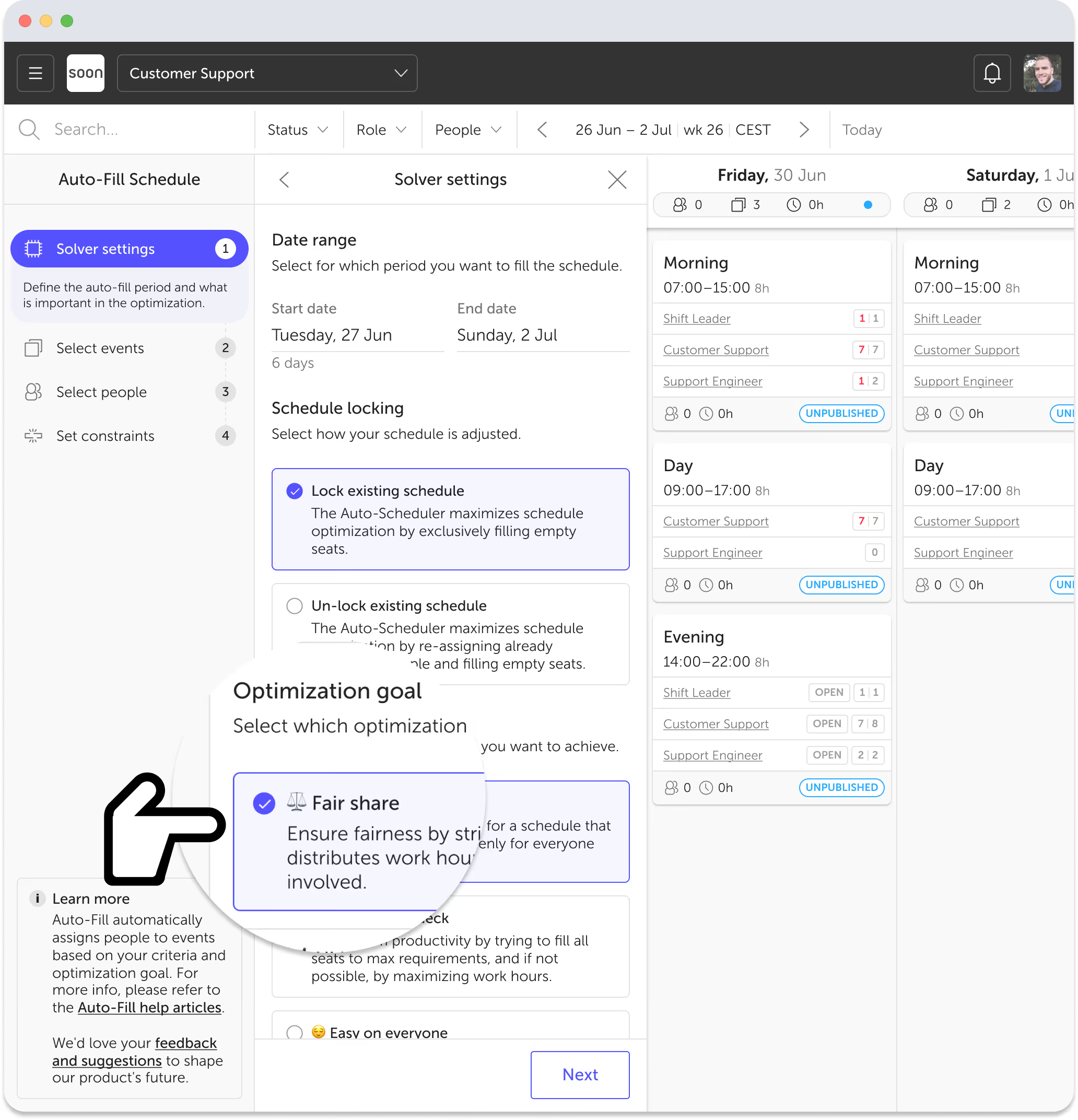
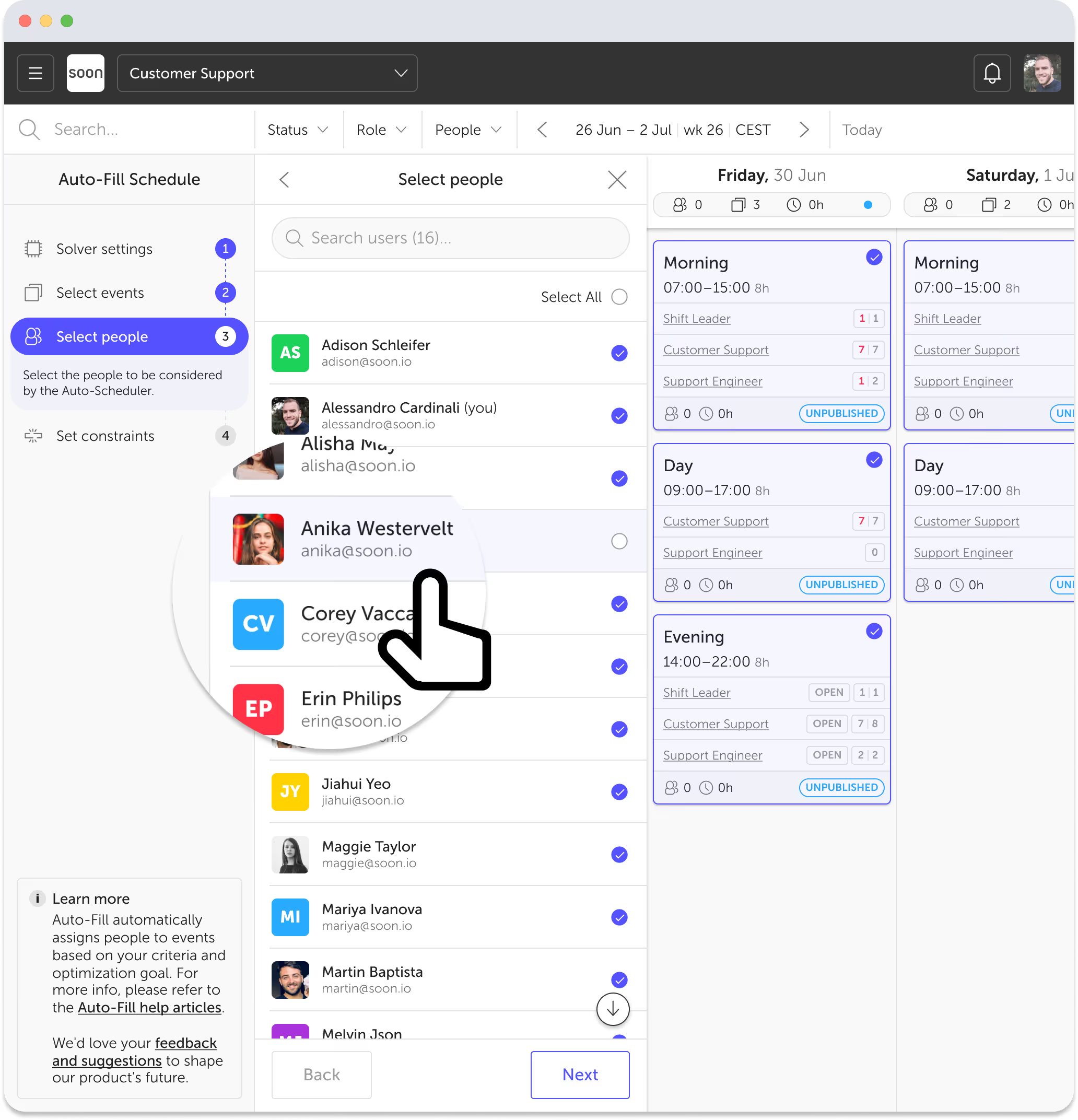
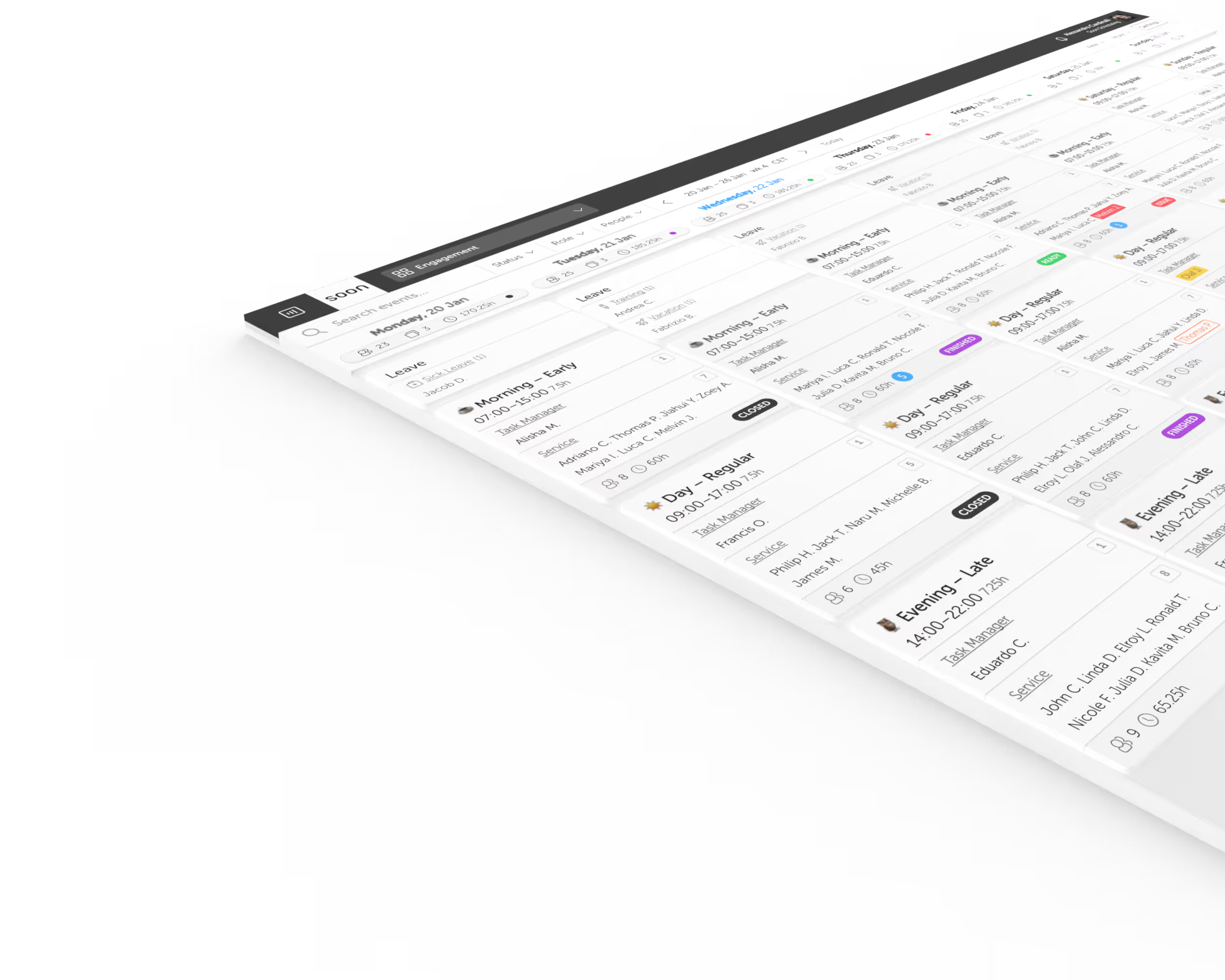
Auto-scheduling software assigns employees to shifts using rules such as availability, qualifications, contracted hours, leave, rest periods, and required coverage. It gives planners a faster starting point while keeping the result reviewable and editable.
Which rules can Soon use when filling shifts?
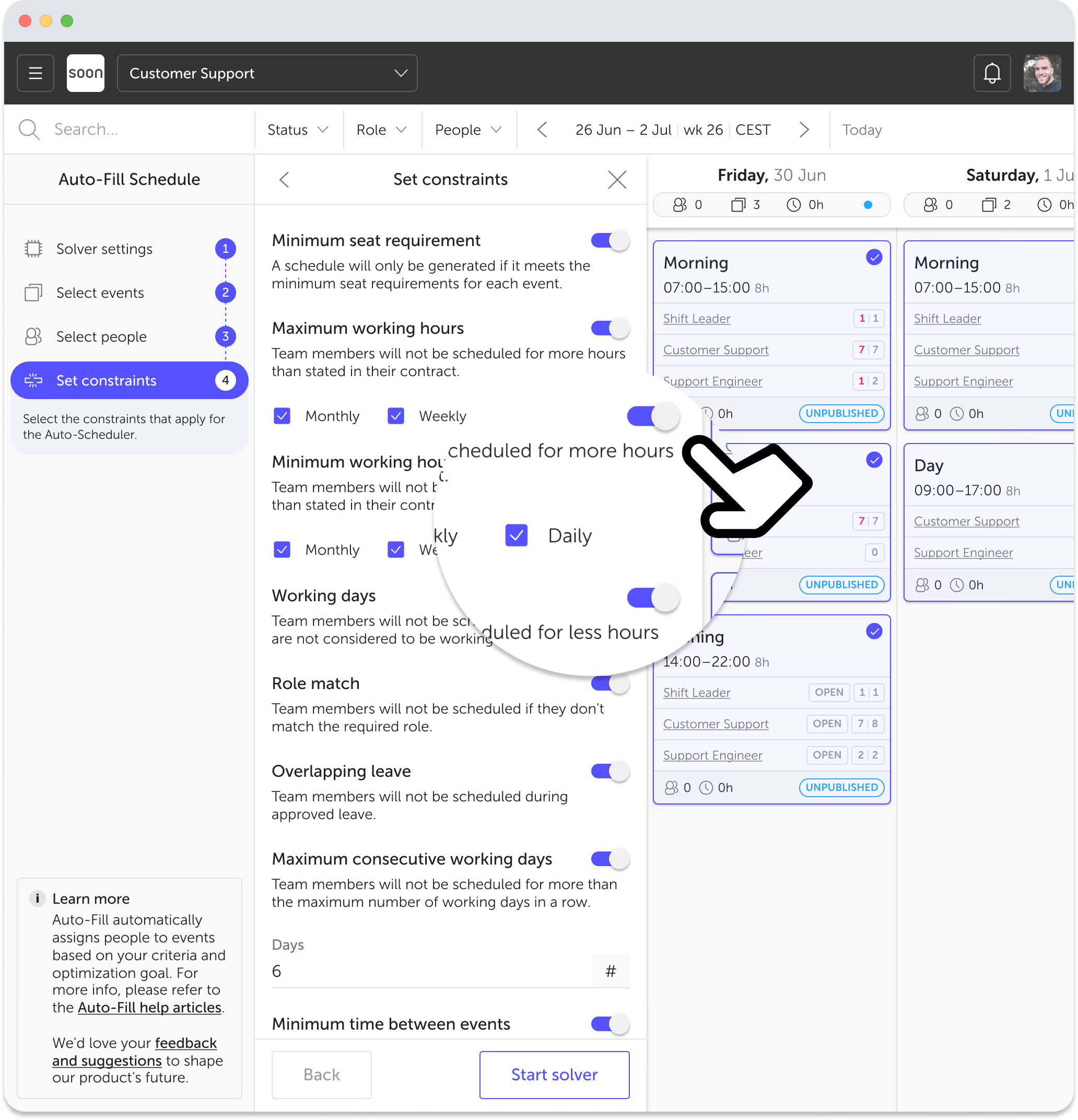
Soon can account for role matching, minimum and maximum hours, consecutive working days, multiple shifts on the same day, approved leave, minimum rest time, working days, and staffing requirements.
What is the difference between shift auto-fill and intraday scheduling?
Shift auto-fill assigns people to shifts. Intraday scheduling plans activities such as breaks, task blocks, and coverage inside those assigned shifts. Soon supports both layers in one scheduling workflow.
Can planners review and change an auto-generated schedule?
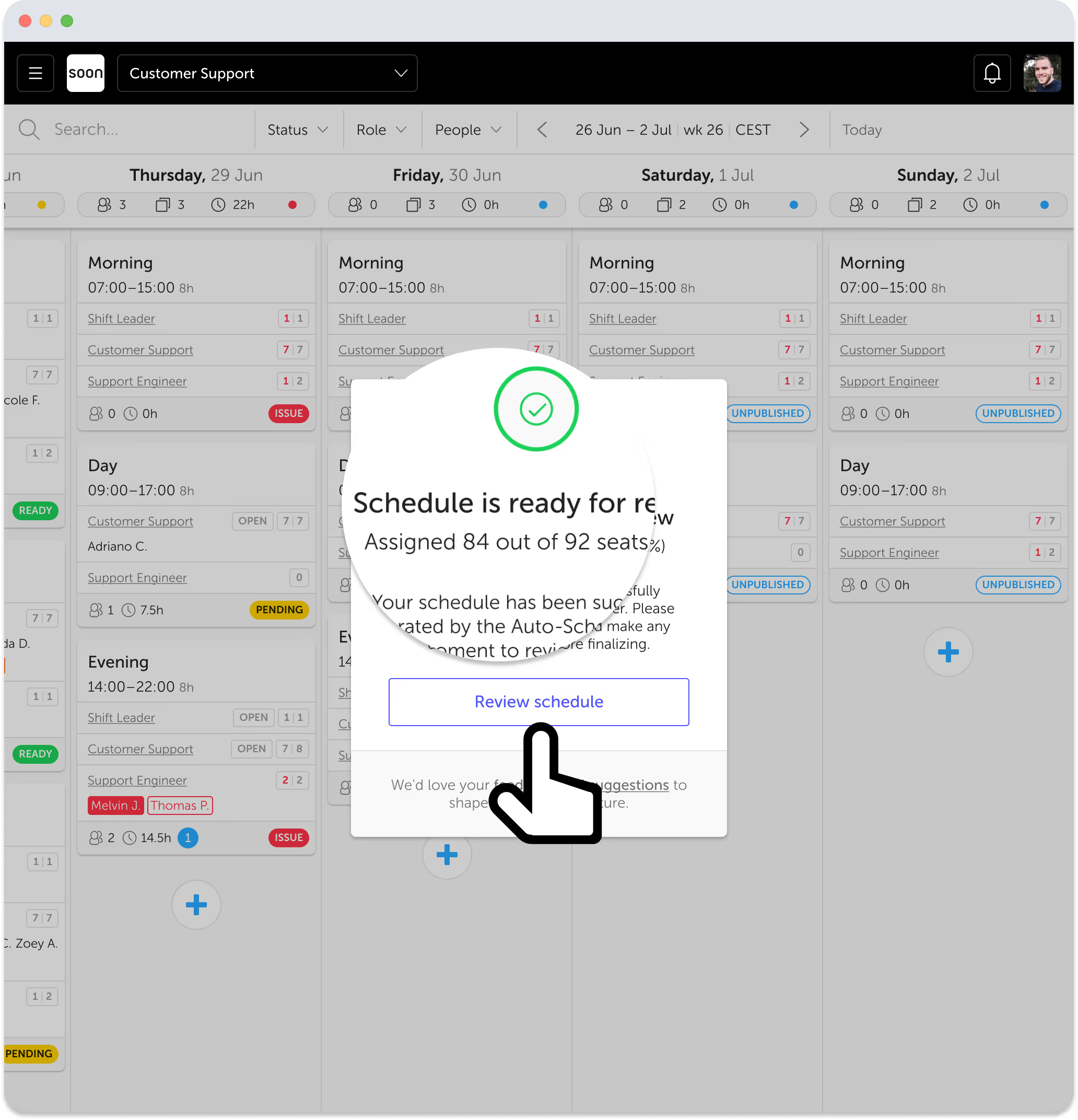
Yes. Planners can review the proposal, make manual changes, adjust the rules or objective, and run the solver again. Nothing needs to be published until the result is ready.
Does auto-scheduling replace a workforce planner?
No. It removes repetitive assignment and rule checking, but planners still decide which constraints matter, review exceptions, account for operational context, and approve the final schedule.
Which plan includes auto-scheduling and forecasting?
Automated shift scheduling starts on the Grow plan. Forecasting and advanced auto-scheduling for activities within shifts are on the Scale plan. Shift swaps are included on all plans, and every plan comes with a free trial of 14, 30 or 60 days depending on the plan.
How quickly can a team go live with auto-scheduling?
Most teams go live the same day. Larger teams usually go live within a week, and enterprise rollouts take longer. Onboarding is self-serve or guided by the founders, and you work directly with a small team that listens to roadmap feedback.
Is auto scheduling software better than spreadsheets or Microsoft Shifts?
Spreadsheets and Microsoft Shifts are fine for publishing a simple rota, but you check every rule by hand. Auto scheduling software applies availability, hours, leave, rest and role rules for you and fills the schedule against staffing requirements. Soon also has a Microsoft Teams app, so teams on Teams can keep working where they are.