- What is intraday scheduling?
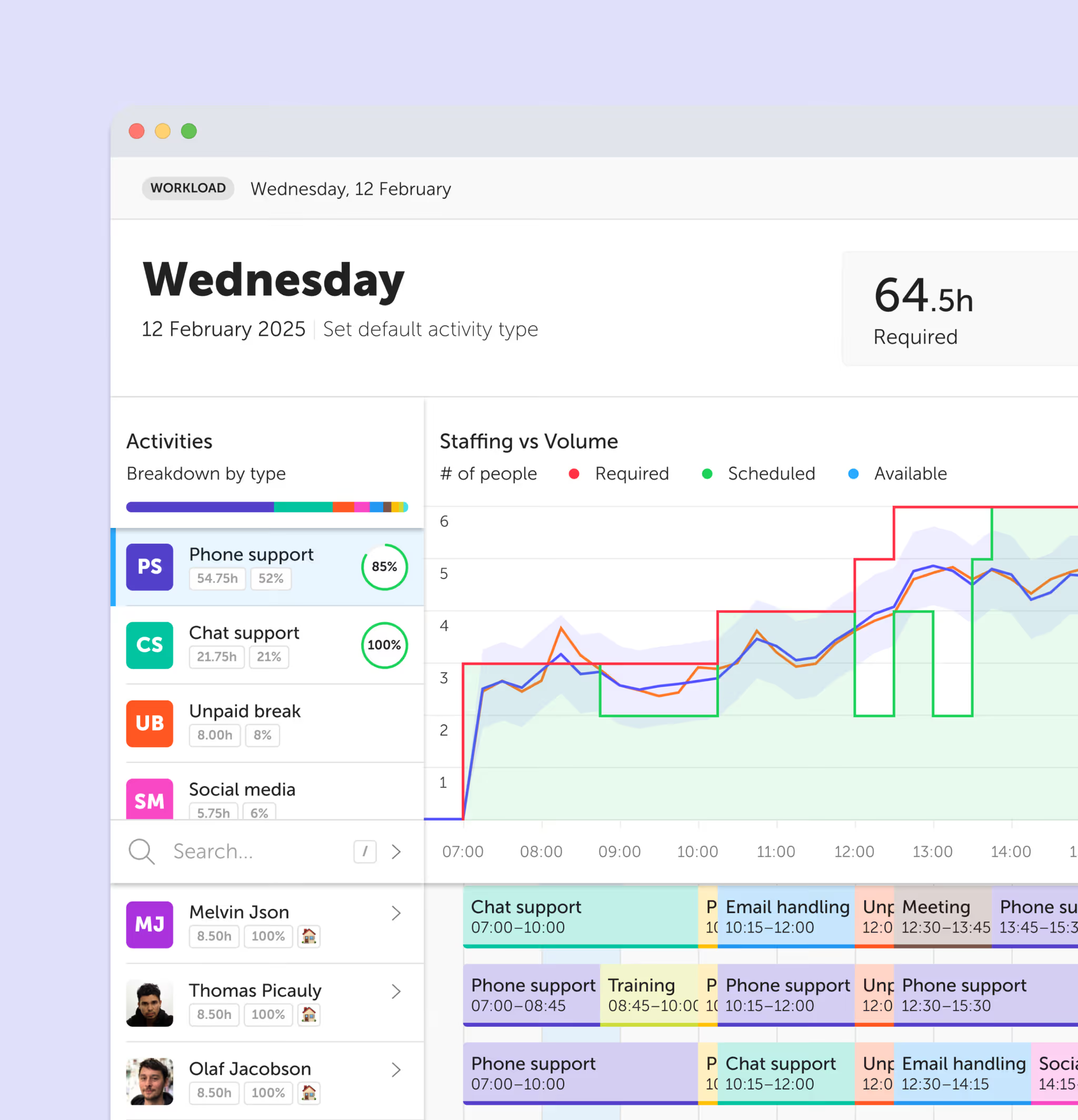
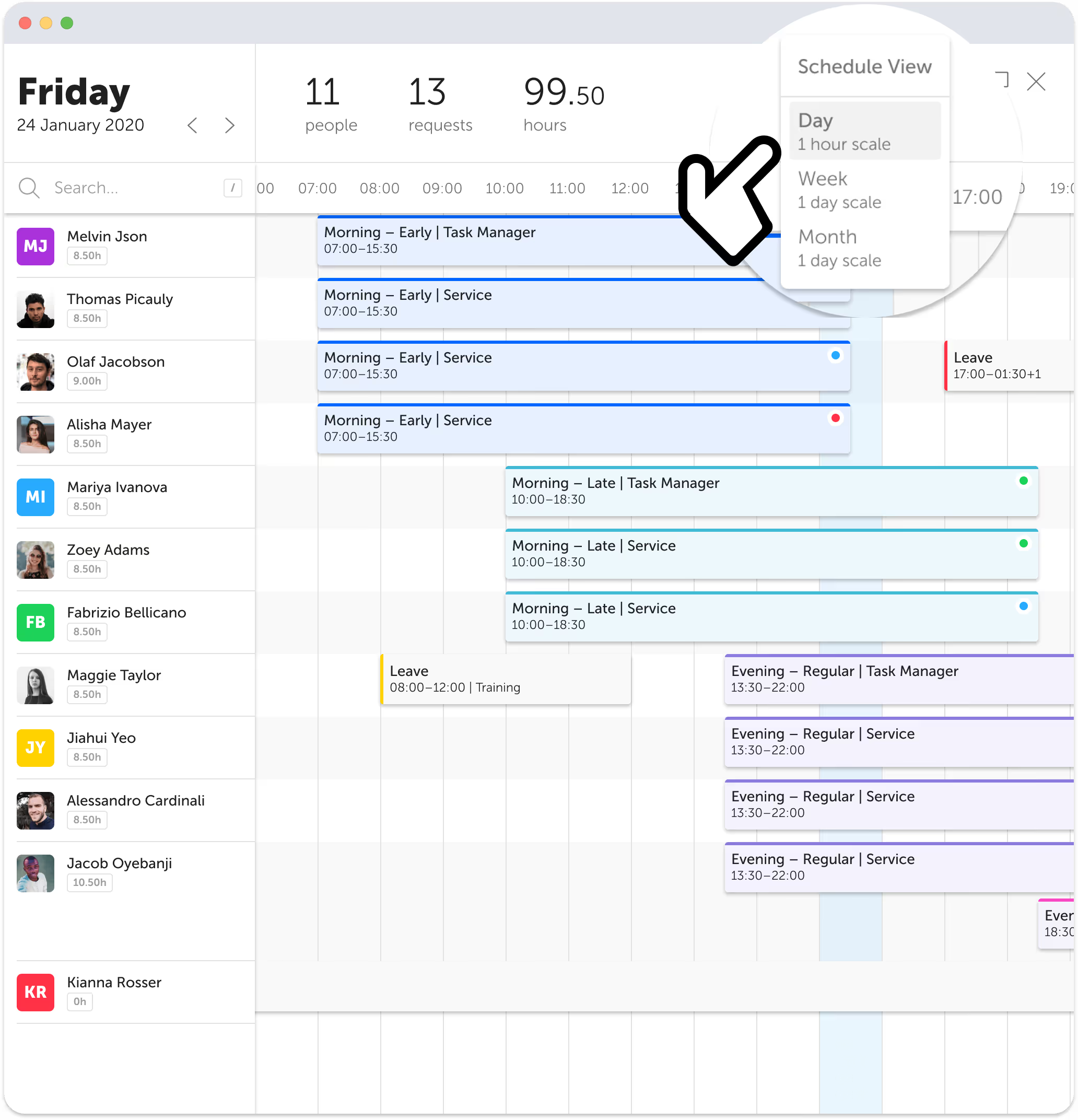
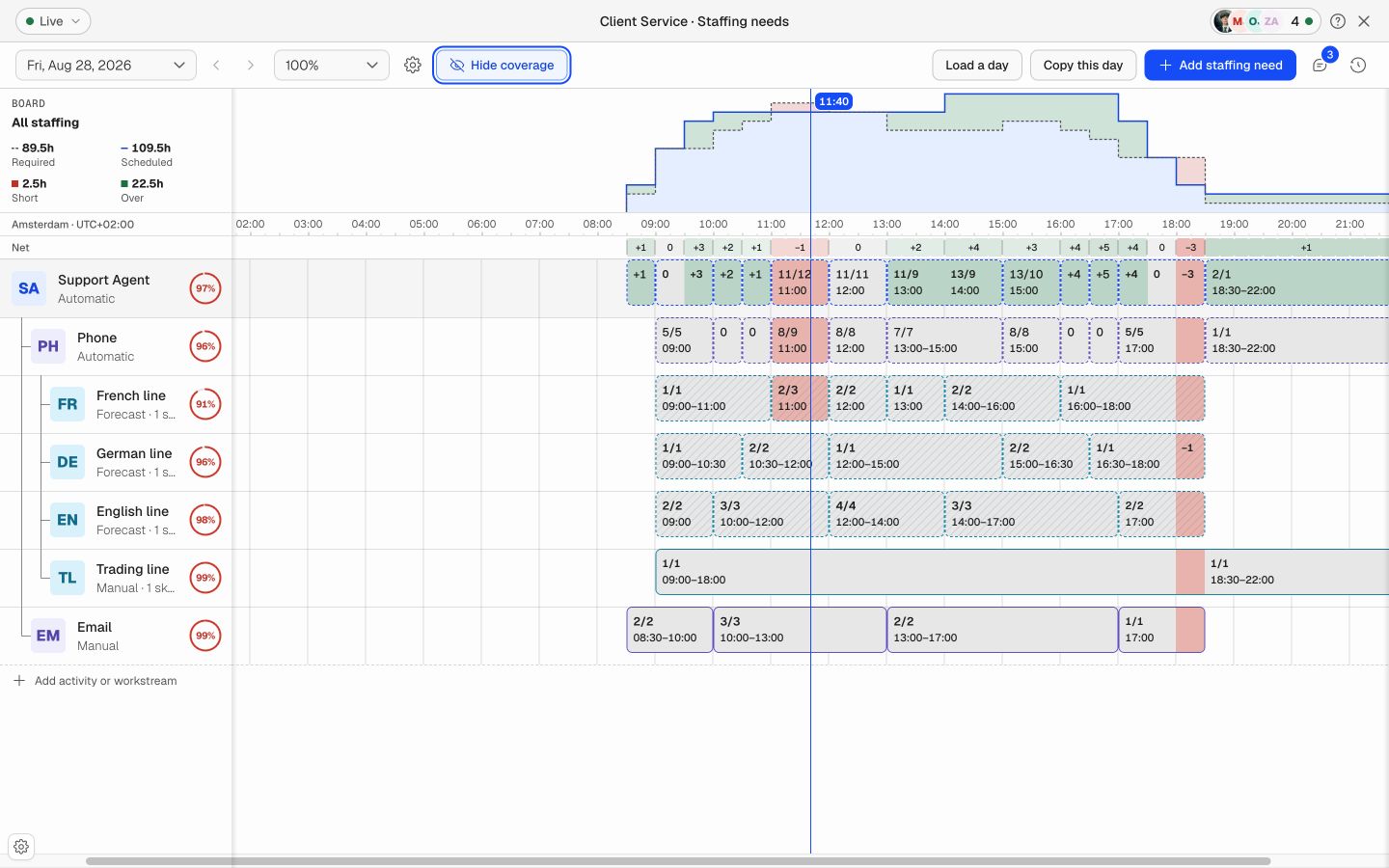
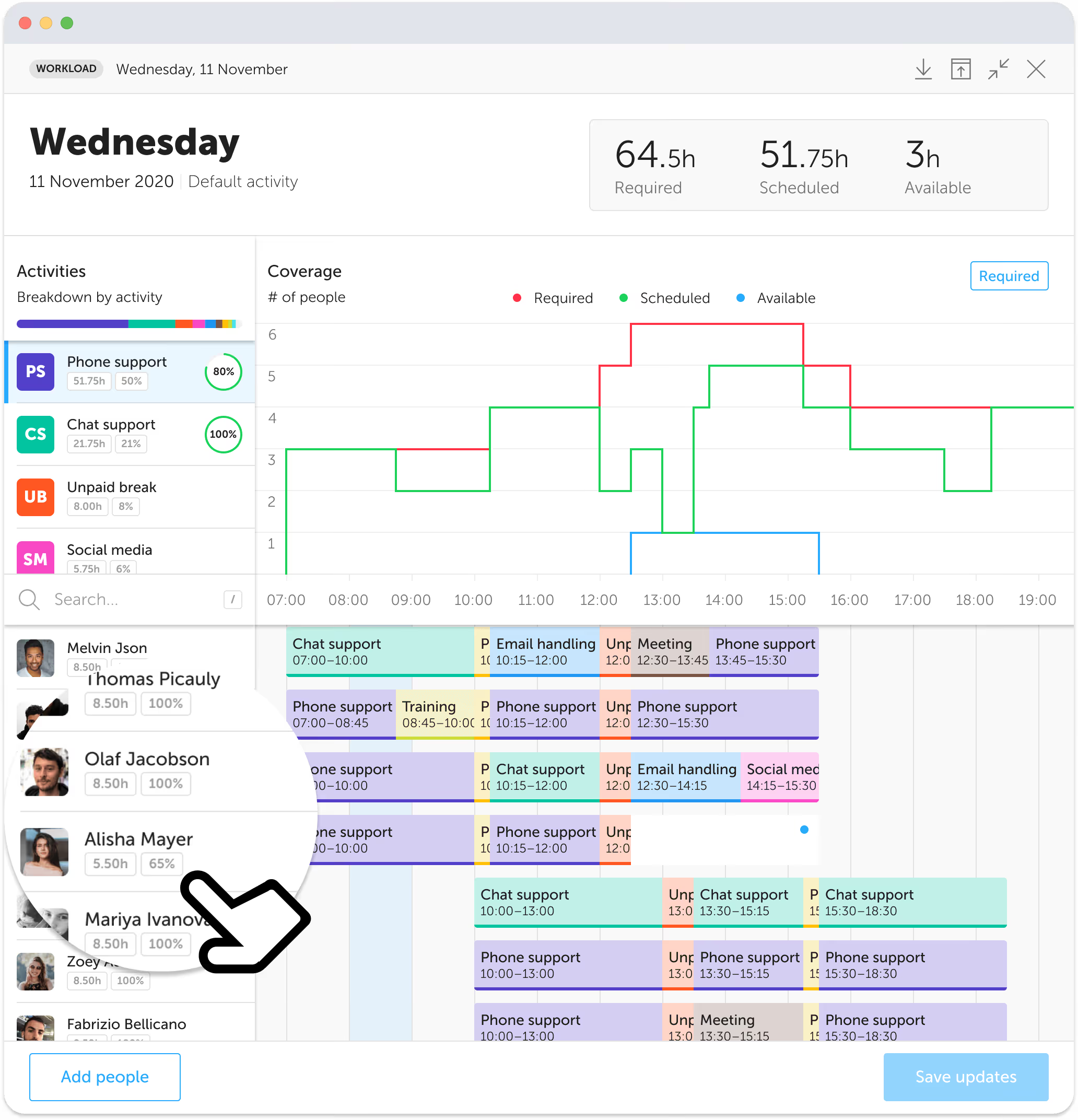
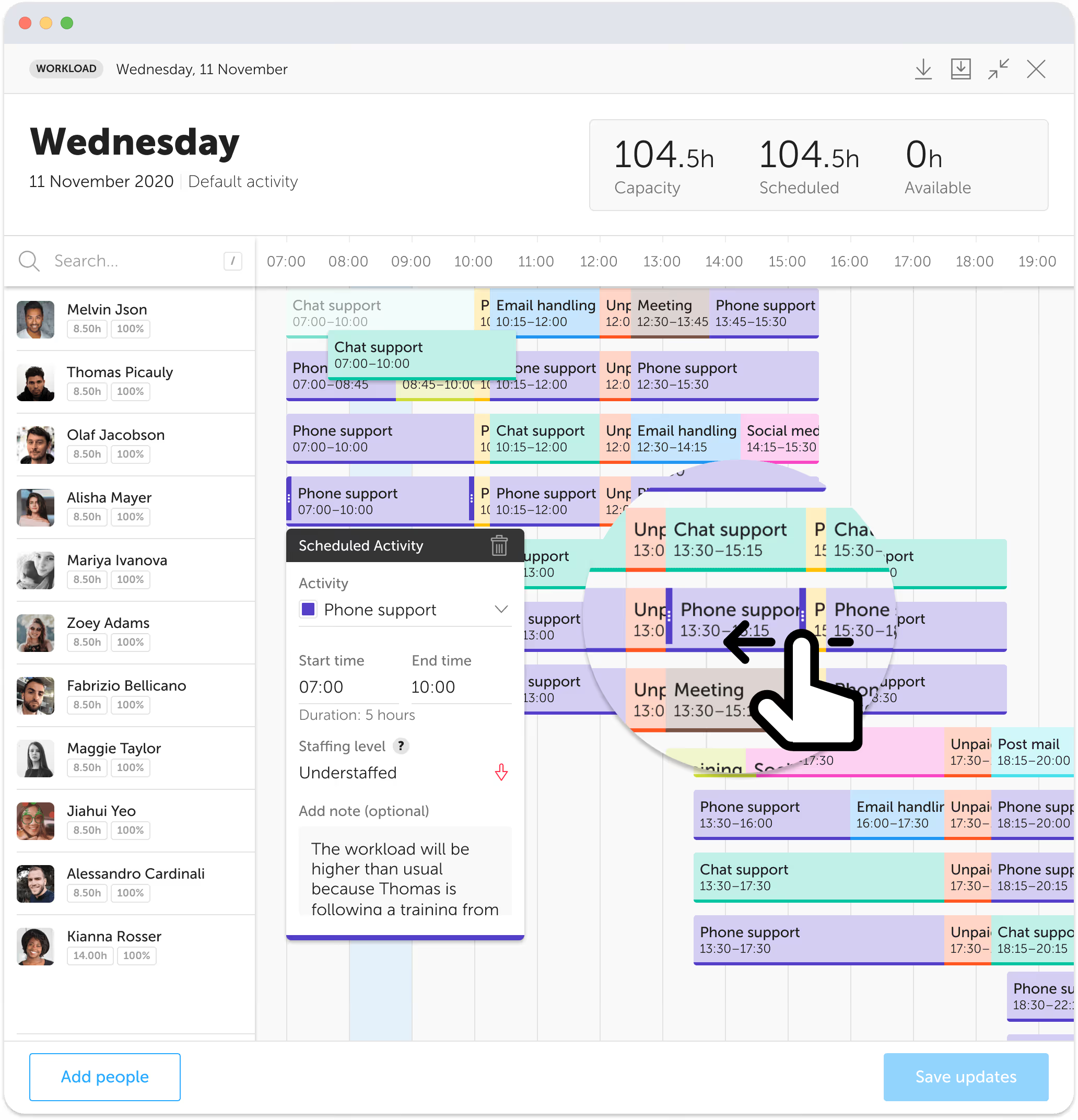
- Intraday scheduling is the practice of planning and adjusting what each person is doing during the working day, rather than only planning who is rostered for it. It covers breaks, activity assignment, and coverage against requirement at interval level, and it starts once the published shift plan meets the reality of the day.
- How is intraday scheduling different from intraday management?
- They describe the same layer of the day from two angles. Intraday management is the contact center term for tracking actual volume against forecast and reacting, and it grew up around adherence monitoring. Intraday scheduling is the planning half of that work: deciding and re-deciding who is on what. Soon does both, and the phrase you use depends on the industry you came from.
- What is an intraday solver?
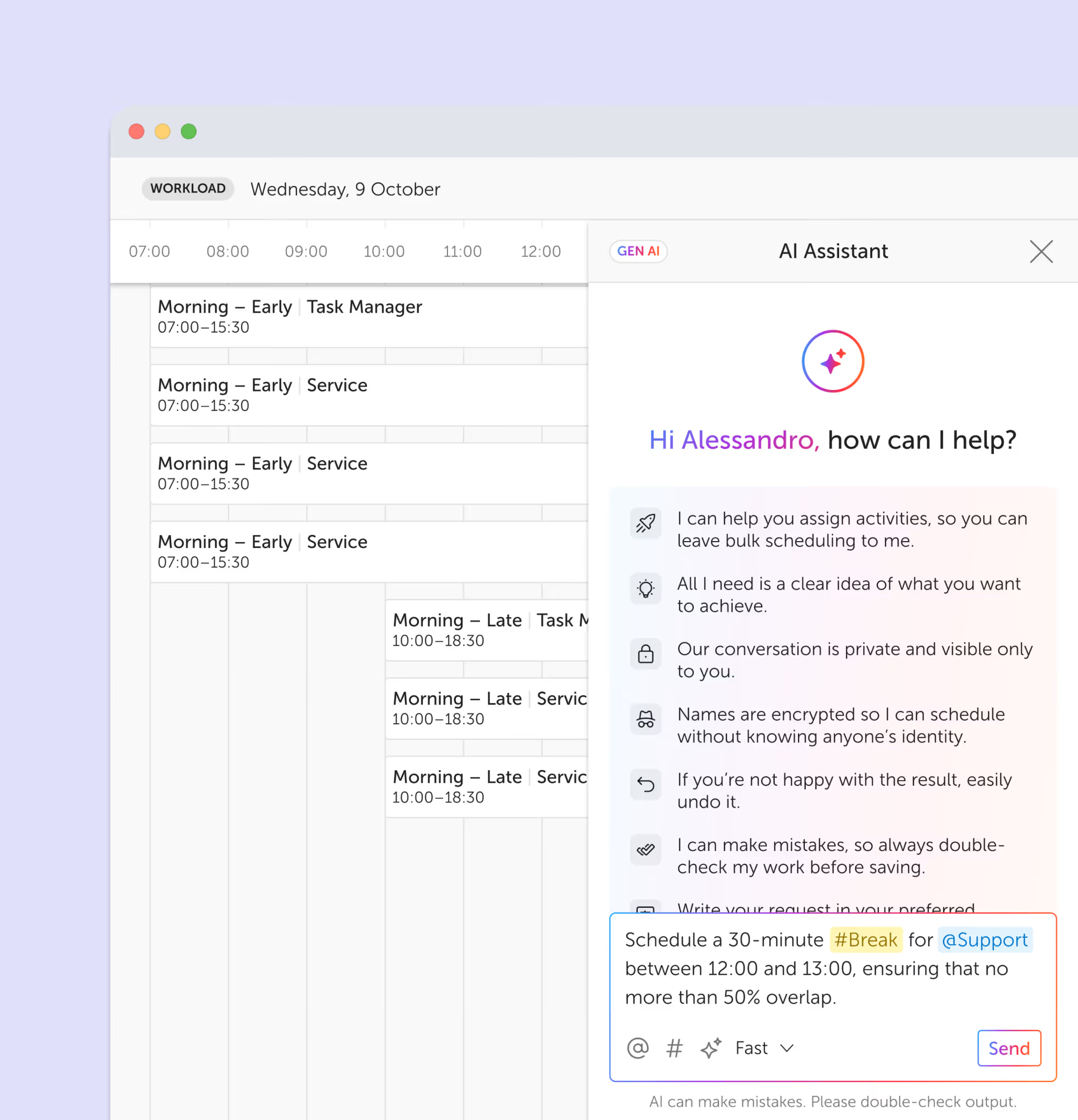
- An intraday solver is an optimization engine that builds the inside of the day for you. You describe your activities and the rules they must obey, such as required headcount at a given hour or the window a break has to fall in, and the solver searches the possible schedules for one that satisfies them. In Soon it runs on seven constraint types and can be re-run whenever the day changes.
- Can the solver handle breaks and working time rules?
- Yes. Break placement is expressed with a time window relative to each person’s shift start, a required duration, and an occurrence count, so a break lands inside the period the person is entitled to it rather than wherever there happens to be a gap. Rules you would rather keep than enforce absolutely can be set as soft constraints.
- Does intraday scheduling only apply to contact centers?
- No. Contact centers named the discipline, but the same problem appears anywhere work moves during the day and coverage cannot lapse: clinics and front desks, service operations, support teams, back office processing, and any operation rotating people between positions inside a shift.