Skip to content
Solutions

Where do tasks get stuck in a team, and how do you spot the pattern early?

If work feels slower than it should, tasks are usually getting stuck in a few predictable spots: waiting for approval, waiting for information, stuck in overloaded queues, or handed between teams with no clear owner.

  • Work piles up before the same handoff or approval step
  • No one owns blocked items clearly
You might have asked

“We keep finding out about blocked work too late.”

“The same stage always seems to become the choke point.”

“People are working hard, but the queue still is not moving.”

What this usually means

What this search usually means in real life

Teams often notice stuck work only after a deadline or service target is already at risk. By then the problem feels broad and messy. In reality, the blockage is often concentrated in one or two points of the workflow.

Finding those points is the fastest way to make the whole system feel lighter.

Work piles up before the same handoff or approval step

No one owns blocked items clearly

Escalations jump the queue and create more instability

Managers spend time chasing status instead of fixing causes

The queue looks healthy until you inspect item age
Where it breaks

What is probably going wrong

A task is not only stuck when nobody is touching it. It is also stuck when it keeps moving sideways instead of forward, or when it waits behind too much competing work.

That is why queue age and blocked reasons are usually stronger signals than raw volume.

Work piles up before the same handoff or approval step

No one owns blocked items clearly

Escalations jump the queue and create more instability

Managers spend time chasing status instead of fixing causes

The queue looks healthy until you inspect item age

What to fix

What to fix first

Most teams do not need a dramatic overhaul first. They need a cleaner operating loop so planning, changes, and execution stop fighting each other.

Track queue age by workflow stage, not just total items

Give blocked work an explicit status and owner

Limit how much work enters overloaded stages

Review repeated blockers weekly to fix the system upstream

Use staffing and intraday adjustments to protect bottleneck stages when pressure rises

Read this next

Where Soon helps

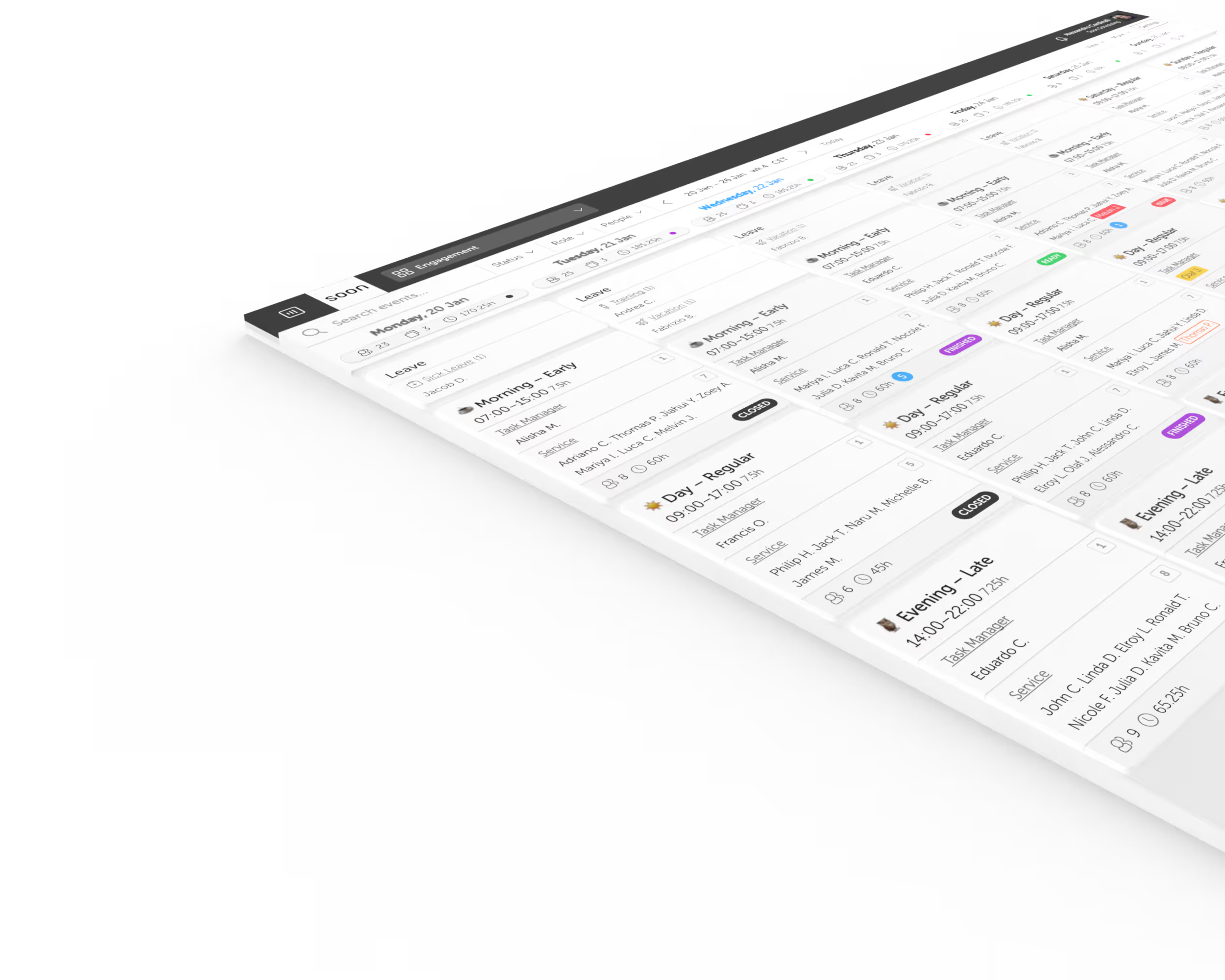
Soon helps teams see where task flow and staffing pressure collide. That makes it easier to tell whether stuck work is a process problem, a capacity problem, or both.

Once that is visible, managers can rebalance earlier instead of only explaining misses later.

Read next

Keep going with the pages that matter most here

If this problem sounds familiar, these are the next places worth reading.

FAQ

A few questions that usually come next

What is the best signal for where tasks get stuck?

Queue age by workflow stage is usually one of the clearest signals, especially when paired with blocked reasons and ownership.

Do stuck tasks usually point to a staffing issue?

Sometimes, but not always. Many stuck tasks come from unclear handoffs, approvals, or overloaded workflow stages rather than total headcount alone.

Your next schedule could take 2 minutes.

Import your team, set your rules, hit auto-fill. Most teams are live the same day.

Try Soon free

30 days free ยท No credit card required

Already have an account? Sign in