Skip to content
Solutions

How to see workflow bottlenecks in a team before they wreck the week

Workflow bottlenecks usually announce themselves quietly at first: one queue grows, one approval step slows down, one specialist role gets overloaded. If you only look at the overall schedule, you miss the pattern until delivery or service drops.

  • One stage accumulates older work than the rest
  • Upstream teams keep producing work that downstream teams cannot absorb
You might have asked

“Something is jammed, but it is hard to prove where.”

“The whole team feels slower even though only one part is actually blocked.”

“We need earlier warning, not just post-mortems.”

What this usually means

What this search usually means in real life

A workflow bottleneck is the stage or resource that limits the pace of the whole system. It may be one person, one team, one approval step, or one recurring queue.

The trick is to inspect flow, not just occupancy. A fully booked team can still be waiting on the same small choke point.

One stage accumulates older work than the rest

Upstream teams keep producing work that downstream teams cannot absorb

Managers repeatedly pull the same people into rescue mode

Service or delivery performance dips in waves

People describe the same blocker every week but nothing structural changes
Where it breaks

What is probably going wrong

Bottlenecks are easier to spot when you look at queue age, blocked reasons, rework loops, and the specialist stages that everyone depends on. Pure headcount views hide too much of that.

In operations teams, bottlenecks also show up as intraday pressure. The queue might look fine in the morning and break by noon.

One stage accumulates older work than the rest

Upstream teams keep producing work that downstream teams cannot absorb

Managers repeatedly pull the same people into rescue mode

Service or delivery performance dips in waves

People describe the same blocker every week but nothing structural changes

What to fix

What to fix first

Most teams do not need a dramatic overhaul first. They need a cleaner operating loop so planning, changes, and execution stop fighting each other.

Track aging work by workflow stage

Measure how much work gets blocked or sent back for rework

Identify stages with specialist dependency or approval drag

Use intraday visibility to rebalance before the queue spikes further

Protect the bottleneck from low-value interruption work where possible

Read this next

Where Soon helps

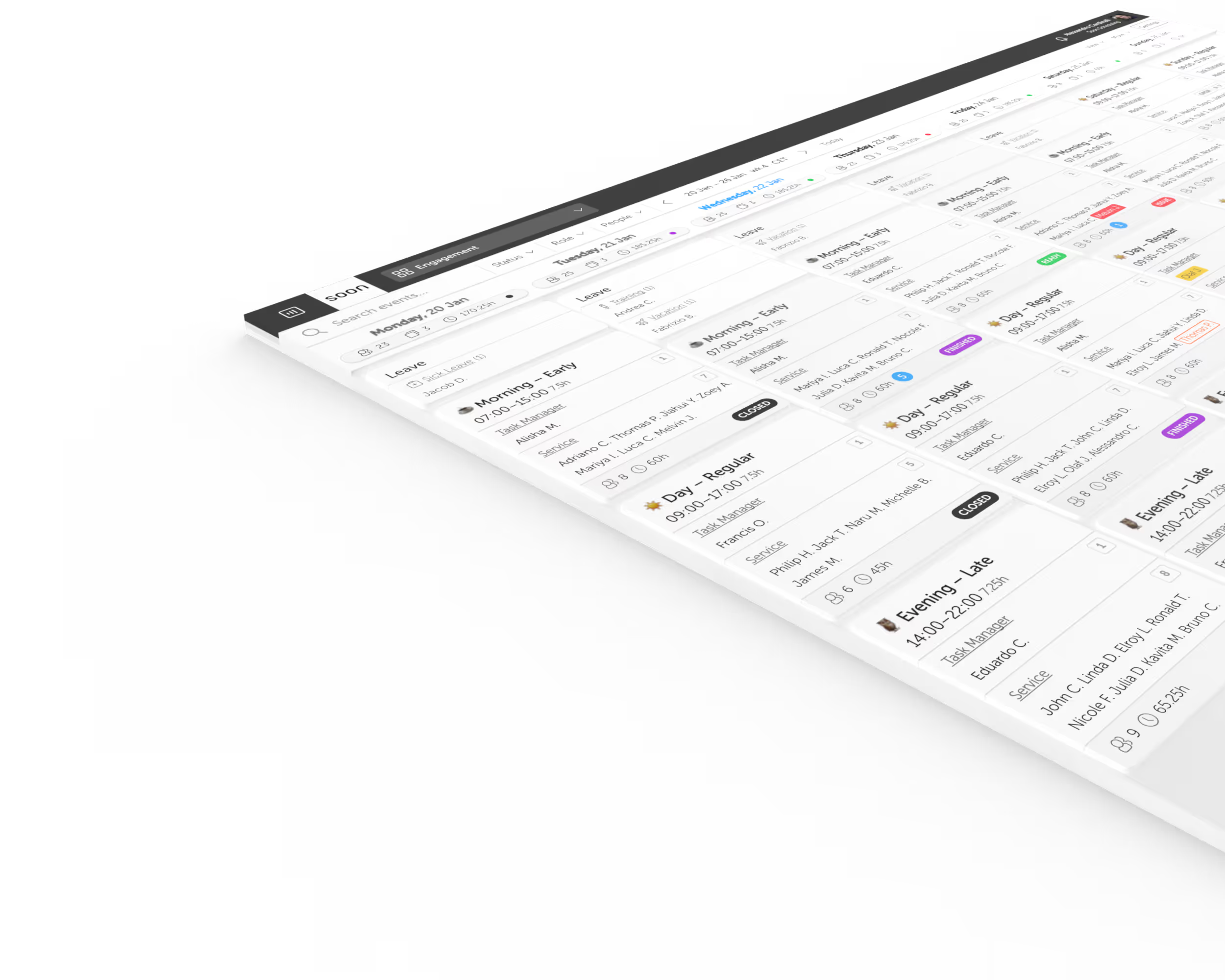
Soon gives teams a better view of bottlenecks because staffing, workload, and intraday changes can be seen together. That helps managers spot when a local choke point is turning into a broader capacity problem.

It is a much faster way to intervene than waiting for the weekly report.

Read next

Keep going with the pages that matter most here

If this problem sounds familiar, these are the next places worth reading.

FAQ

A few questions that usually come next

What is the easiest way to see a workflow bottleneck?

Look at where work ages fastest and where items spend the most time blocked or waiting. Those usually expose the bottleneck quickly.

Why does a bottleneck make the whole team look slower?

Because the pace of the system gets capped by the slowest critical stage. Upstream work keeps building even if other parts of the team are busy.

Your next schedule could take 2 minutes.

Import your team, set your rules, hit auto-fill. Most teams are live the same day.

Try Soon free

30 days free ยท No credit card required

Already have an account? Sign in