7shifts
One-way sync7shifts publishes employee shifts to Google Calendar and Outlook through a personal iCal subscription URL. Schedule changes refresh on the calendar provider's polling interval. Hospitality-focused product.
Most modern shift schedulers can put employee shifts onto Google Calendar and Outlook, but the method varies. Most use one-way iCal feeds. A smaller group offers real-time, two-way sync. Here is how 11 commonly used products compare, and what to check before you buy.
Vendors are listed alphabetically. "One-way" means the scheduler publishes into the calendar but does not read events back from it. "Two-way" means changes flow in both directions.
| Scheduler | Google Calendar | Outlook / Microsoft 365 | Direction | Mechanism |
|---|---|---|---|---|
| 7shifts | Yes | Yes | One-way | iCal feed |
| Deputy | Yes | Yes | One-way | iCal feed |
| Homebase | Yes | Yes | One-way | iCal subscription |
| Humanity (ShiftPlanning) | Yes | Yes | One-way | iCal feed, Exchange on enterprise |
| Microsoft Shifts (Teams) | No native option | Yes | One-way | Microsoft 365 native |
| Planday | Yes | Yes | One-way | iCal feed |
| Shiftboard | Yes | Yes | One-way | iCal feed, Exchange on enterprise |
| Sling | Yes | Yes | One-way | iCal feed |
| Soon | Yes | Yes | Two-way | OAuth, native API |
| UKG Pro Workforce Management (Kronos) | Through connector | Yes | One-way | Exchange, connectors |
| When I Work | Yes | Yes | One-way | iCal feed |
Capabilities vary by plan tier and account type. Verify with the vendor before buying.
Each entry covers how shifts reach Google Calendar and Outlook on that platform, and any caveats worth knowing.
7shifts publishes employee shifts to Google Calendar and Outlook through a personal iCal subscription URL. Schedule changes refresh on the calendar provider's polling interval. Hospitality-focused product.
Deputy offers a per-employee iCal URL that adds published shifts to Google Calendar or Outlook. Two-way sync is not native. Enterprise plans expose API access for custom flows.
Homebase lets each employee subscribe to their shifts in Google Calendar or Outlook via a personal calendar feed. Mobile apps add shifts to the device calendar directly.
Humanity publishes shifts to Google Calendar and Outlook through calendar feeds. Enterprise tiers add deeper Exchange and Office 365 integration.
Shifts is a Teams app, so visibility in Outlook and Microsoft 365 calendars is native and tight. There is no native Google Calendar integration. Best fit for organisations standardised on Microsoft 365.
How Microsoft Shifts compares with Soon beyond calendar sync →
Planday provides a calendar feed each employee can subscribe to from Google Calendar or Outlook. Used widely in European hospitality and retail.
Shiftboard exposes calendar publishing to Google Calendar and Outlook, with Exchange integration available for enterprise customers. Geared at higher-complexity scheduling.
Sling publishes each employee's shifts to Google Calendar or Outlook via an iCal subscription URL. Mobile apps also push shifts into the device calendar.
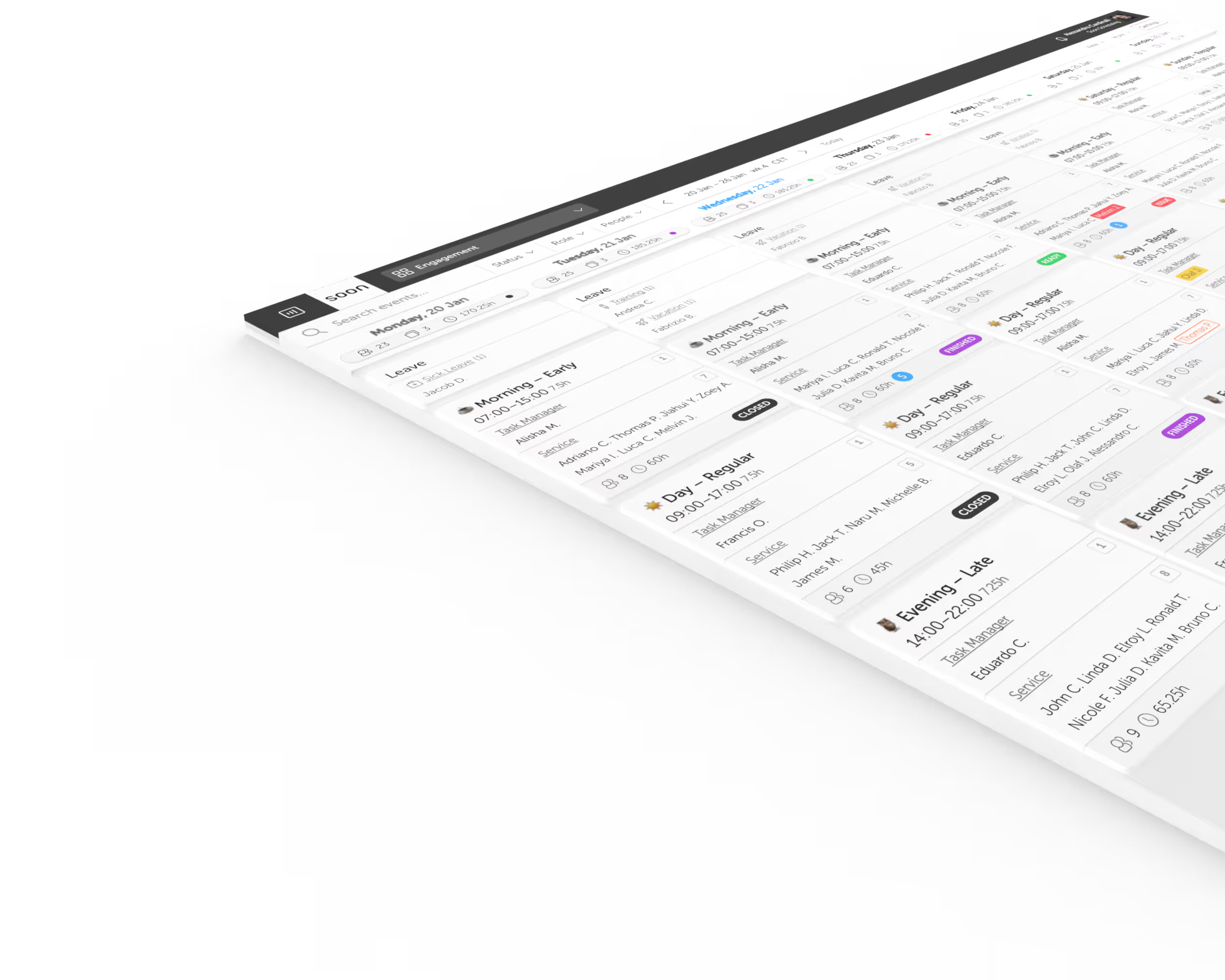
Soon connects to Google Calendar and Outlook through OAuth and syncs in real time, in both directions. Shifts, activities, and leave from Soon land in the calendar; existing calendar events surface inside Soon's workload view so planners can schedule around meetings. No iCal feed delay.
UKG offers Outlook and Exchange integration for enterprise customers as part of broader workforce management deployments. Google Calendar support is typically delivered through connectors or professional services.
How UKG Pro Workforce Management compares with Soon beyond calendar sync →
When I Work publishes shifts to Google Calendar and Outlook through a personal calendar feed and adds them to the device calendar through its mobile apps. One of the more commonly cited options for small teams.
The phrase "publishes to Google Calendar and Outlook" hides a lot of variance. These five questions decide whether a tool will actually fit how your team works.
iCal feeds auto-update, but only in one direction. If an employee books a meeting directly in their calendar, the scheduler does not know. Two-way sync (which Soon offers natively) prevents that class of scheduling conflict because calendar events are visible inside the planning view.
An "Outlook integration" can mean any of three different things. Modern integrations target Microsoft 365 over OAuth. On-prem Exchange usually needs an enterprise connector. Standalone Outlook with .pst files is rarely supported by anyone.
Some Google Workspace and Microsoft 365 tenants restrict third-party calendar writes. Confirm your IT admin can grant the OAuth scopes the scheduler asks for, especially for two-way sync.
A few products lean on push notifications instead of putting real entries in personal calendars. That is fine for solo reminders but does not help anyone see your shifts when they are booking around you.
Basic iCal feeds are usually included on every plan. Native API integrations, two-way sync, and SSO-aware connections are commonly paid or enterprise-tier features. Check the pricing page, not just the marketing page.
Soon connects to Google Calendar and Outlook through OAuth. Shifts, activities, and leave from Soon appear in each person's calendar in real time. Events booked in the calendar surface in Soon's workload view, so planners can schedule around them instead of clashing with them. There is no polling interval and no manual feed URL to share.
Most modern shift scheduling tools publish shifts to Google Calendar and Outlook automatically. Common options include 7shifts, Deputy, Homebase, Humanity, Microsoft Shifts, Planday, Shiftboard, Sling, Soon, UKG, and When I Work. The majority use one-way iCal feeds that auto-update on the calendar provider's polling interval. Soon is the option in this list that offers real-time, two-way sync through OAuth instead of an iCal feed.
One-way sync pushes shifts from the scheduler into a personal calendar. Edits made in the calendar do not flow back to the scheduler. Two-way sync goes both directions: the scheduler reflects calendar events (like meetings or focus time) inside its planning view, and changes to shifts in the scheduler update the calendar entry in place. Two-way sync prevents the most common cause of scheduling conflicts, which is meetings booked directly in someone's calendar without the scheduler knowing.
True two-way sync is uncommon. Soon offers it natively for both Google Calendar and Outlook over OAuth. Most other shift schedulers in this category publish a one-way iCal feed, and rely on Zapier, Make, or custom API integrations for any reverse flow.
Yes. Soon connects to Google Calendar through OAuth and works with both personal Gmail accounts and Google Workspace domains. Workspace admins can apply standard third-party app policies. Sync is real-time and two-way.
Yes. Soon connects to Outlook and Microsoft 365 through OAuth. Shifts, activities, and leave appear in the user's Outlook calendar, and existing Outlook events show up in Soon's workload view. It works with Microsoft 365 hosted Exchange. Standalone Outlook client files (.pst) are not supported.
Yes, on every scheduler in this list. The differences are in how. iCal feeds (the most common method) update on a provider-controlled interval. Native OAuth integrations like Soon's update in real time, and let admins keep visibility into scheduling conflicts caused by calendar events.
Varies by vendor. iCal feeds are commonly available on free or starter plans, since they require little vendor infrastructure. Native API integrations (two-way sync, SSO-aware connections, enterprise Exchange) are more often gated to paid or enterprise tiers. Check the specific vendor's plan page before buying. Soon includes Google Calendar and Outlook sync on its Start plan upward.
Import your team, set your rules, hit auto-fill. Most teams are live the same day.
30 days free · No credit card required
Already have an account?Sign in