Skip to content
Solutions

Running position rotations on a spreadsheet works right up to the first callout

Intrashift scheduling is the plan for what happens inside a shift: which position each person holds, when they rotate to the next one, and who relieves whom. Most venues run that plan as a spreadsheet per area lead, which holds up on a calm day and falls apart on a busy one.

  • Every area or venue lead maintains a private version of the rotation
  • Break timing, certifications, and heat limits live in memory rather than in the sheet
You might have asked

“Every area lead keeps their own rotation sheet and none of them match.”

“One person calls in and someone has to redraw the whole grid by hand.”

“The rules only exist in the heads of the people who have been here longest.”

What this usually means

What this search usually means in real life

This search usually comes from an operations lead at a venue where the shift schedule is already solved. People are rostered, the hours are covered, and the real work starts once everyone arrives. Somebody still has to decide who stands where, for how long, and in what order they move.

That plan tends to live in a spreadsheet owned by whoever knows the area best. It stops being true the moment a person calls in, a queue surges, or weather closes an outdoor location and its labor has to be redeployed somewhere else.

Every area or venue lead maintains a private version of the rotation

Break timing, certifications, and heat limits live in memory rather than in the sheet

A single callout means rebuilding the grid by hand while the shift is running

Walk time between positions is ignored, so relief always arrives late

Nobody can reconstruct later who was actually standing where at a given hour
Where it breaks

What is probably going wrong

The risk is not the spreadsheet itself. It is counting on every individual lead to know every rule and apply it the same way. Union terms, legal break timing, certification requirements, and exposure limits for heat, cold, or heavy costume are constraints a system should enforce, not trivia a person should recall under pressure.

The second issue is speed. A rotation plan is only useful if it can be rebuilt in seconds, because a large operation re-solves it many times a day. A sheet that takes twenty minutes to redo gets abandoned as soon as the day turns, and the rotation quietly reverts to word of mouth.

Every area or venue lead maintains a private version of the rotation

Break timing, certifications, and heat limits live in memory rather than in the sheet

A single callout means rebuilding the grid by hand while the shift is running

Walk time between positions is ignored, so relief always arrives late

Nobody can reconstruct later who was actually standing where at a given hour

What to fix

What to fix first

Most teams do not need a dramatic overhaul first. They need a cleaner operating loop so planning, changes, and execution stop fighting each other.

Write the rotation rules down once as constraints instead of trusting each lead to remember them

Attach required skills and certifications to positions, with expiry dates, so gating happens automatically

Build walk time between positions into the interval rather than assuming relief is instant

Shorten rotation intervals where heat, cold, or heavy costume make long stints unsafe

Publish one shared rotation, including printed or posted output for frontline staff who carry no phone

Read this next

Where Soon helps

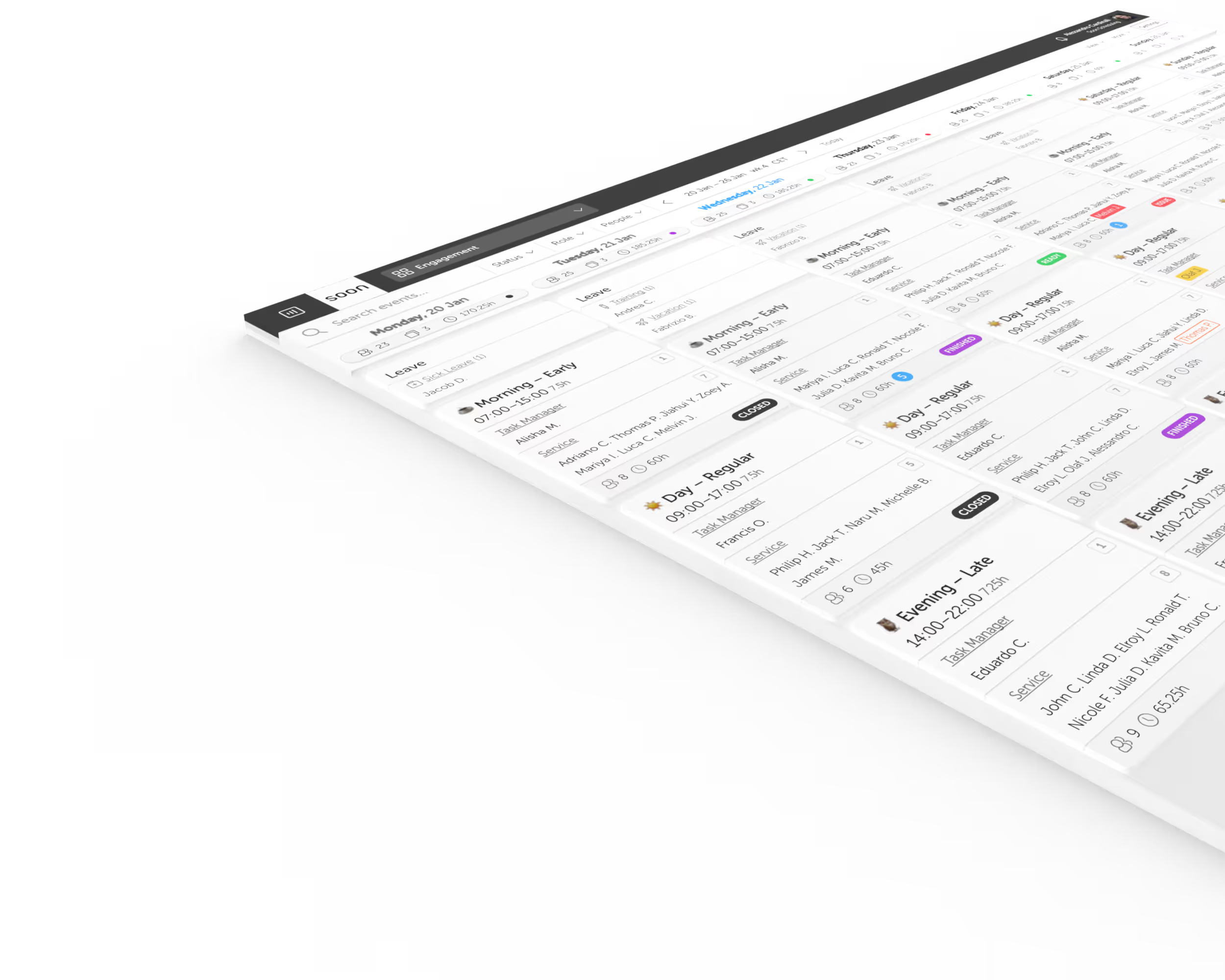
Soon plans inside the shift, not only around it. Positions, required skills, break timing, and rotation intervals become rules the schedule has to respect, so a valid rotation gets generated rather than remembered by the person holding the sheet.

When someone calls in or a location closes, the day can be re-solved instead of patched by hand, and the rest of the shift stays consistent with the same rules that produced the original plan.

Read next

Keep going with the pages that matter most here

If this problem sounds familiar, these are the next places worth reading.

FAQ

A few questions that usually come next

Is a position rotation spreadsheet the same thing as a shift schedule?

No. A shift schedule puts someone on site from 8am to 4pm. A position rotation plans what happens inside those hours: which station they hold, when they move, and who relieves them.

What does a bump mean in a rotation schedule?

In attractions and hospitality it is the relief handoff. Someone walks to a position, takes over, and the person leaving moves to the next assignment, which cascades down a staggered chain. That is a different sense from union bumping rights, where seniority lets an employee displace another during layoffs.

Your next schedule could take 2 minutes.

Import your team, set your rules, hit auto-fill. Most teams are live the same day.

Try Soon free

30 days free ยท No credit card required

Already have an account?Sign in