How many agents do you need for 1000 calls a day?
Peak hour math says 14 on the phones, the average hour says 12, and the schedule that closes that gap is shaped, not flat.
The short answer
1000 calls a day over an 8-hour line, with the busiest hour carrying about 15 percent of volume, peaks at 150 calls an hour: that hour takes 14 agents on the phones, and 20 scheduled at 30 percent shrinkage.
- Peak-hour calls
- 150
- Offered load
- 10 erlangs
- Agents on phones
- 14
- Scheduled agents
- 20
- Service level hit
- 87.5%
- Occupancy
- 71.4%
Why the math lands there
A thousand calls across an 8-hour window averages 125 calls an hour, but arrivals never spread themselves flat. Assume the busiest hour carries about 15 percent of daily volume and you are sizing for 150 calls in that hour. At a 240-second average handle time that is 10 hours of call work landing in 60 minutes. Erlang C puts the requirement at 14 agents on the phones, which delivers 88 percent of calls answered within 20 seconds at 71.4 percent occupancy.
The average hour needs only 12 agents for its 125 calls, running at 69.4 percent occupancy. That two-agent gap between peak and average is where this volume gets interesting. Staff 14 all day on identical 8-hour shifts and you pay two people to be idle through the shoulders. Staff 12 all day and the peak hour drops to 62 percent of calls answered within 20 seconds, well below an 80/20 target. Thirteen splits the difference and still misses at 78 percent.
Fourteen on the phones is not fourteen on the schedule. At 30 percent shrinkage for breaks, meetings, training, and absence, covering the peak takes 20 scheduled agents. This is also the first volume where shift shape becomes a real lever. Staggered starts, a part-time shift laid over the midday peak, or a split shift lets you put 14 where the calls are without carrying 14 through the quiet edges of the day.
- 11000 calls a day with roughly 15 percent landing in the busiest hour means planning for 150 calls in the peak hour; the average hour brings 125.
- 2150 calls an hour times 240 seconds of handle time is 10 erlangs of offered load: 10 hours of phone work arriving every hour.
- 3Counting up from 10 agents, 14 is the first count where Erlang C clears the 80/20 target: 87.5 percent of calls answered within 20 seconds, with an average wait of 10.4 seconds.
- 4At 14 agents, occupancy is 71.4 percent: the share of each logged-in hour spent handling calls rather than waiting for the next one.
- 5Breaks, meetings, training, and absence take agents off the phones for 30 percent of paid time, so keeping 14 on the phones means scheduling 20.
One agent either way
Erlang math is a cliff, not a slope. This is the same peak hour with one or two agents more or fewer on the phones.
| Agents on phones | Answered in 20s | Average wait | Occupancy |
|---|---|---|---|
| 12 | 62% | 53.9s | 83.3% |
| 13 | 77.8% | 22.8s | 76.9% |
| 14the answer | 87.5% | 10.4s | 71.4% |
| 15 | 93.3% | 4.9s | 66.7% |
| 16 | 96.5% | 2.3s | 62.5% |
Peak hour vs average hour
A daily total hides the curve. These are the two hours your day swings between under this page's assumptions; your real intraday pattern replaces them the moment you have interval data.
| Hour | Calls | Agents on phones | Occupancy |
|---|---|---|---|
| Peak hour | 150 | 14 | 71.4% |
| Average hour | 125 | 12 | 69.4% |
If your handle time or target differs
Agents on the phones for 150 calls an hour, across handle times and the two most common service level targets. Adjust every input live in our Erlang C calculator.
| Average handle time | 80/20 target | 90/30 target |
|---|---|---|
| 3 minutes | 11 agents | 11 agents |
| 4 minutesthis page | 14 agents | 15 agents |
| 5 minutes | 17 agents | 18 agents |
| 6 minutes | 19 agents | 21 agents |
Scheduled headcount sits above every number here: this page assumes 30 percent shrinkage, and your own rate comes out of our shrinkage tool.
What Erlang C does not tell you
The whole plan leans on that 15 percent peak share, which holds only until your ACD data says otherwise. If your callers concentrate harder, a sharper peak needs more than 14 agents while the edges need even fewer, which widens the gap that shift shape has to close. Pull interval-level arrival counts for a few representative weeks before you commit to a shift structure, because the shape of the curve, not the daily total, decides what shapes of shifts you need.
Erlang C prices the agents but not the shaping. Staggered starts mean someone opens with thinner cover and someone closes with thinner cover. Split shifts and short part-time blocks are unpopular, harder to recruit for, and in some markets restricted by contract or law. The two heads you save by staffing to the curve instead of the day have to be worth that friction. At this volume they usually are, but treat it as a trade you are choosing, not free money the math found.
Shrinkage is also not flat across the day. The 30 percent that turns 14 on the phones into 20 scheduled assumes breaks, coaching, and meetings can be placed anywhere, but they tend to drift toward midday, exactly where your 150-call hour sits. If you shape shifts around the peak, guard the result by pinning breaks and off-phone work to the shoulders, otherwise a schedule that looks right on paper thins out at the one hour it was built for.
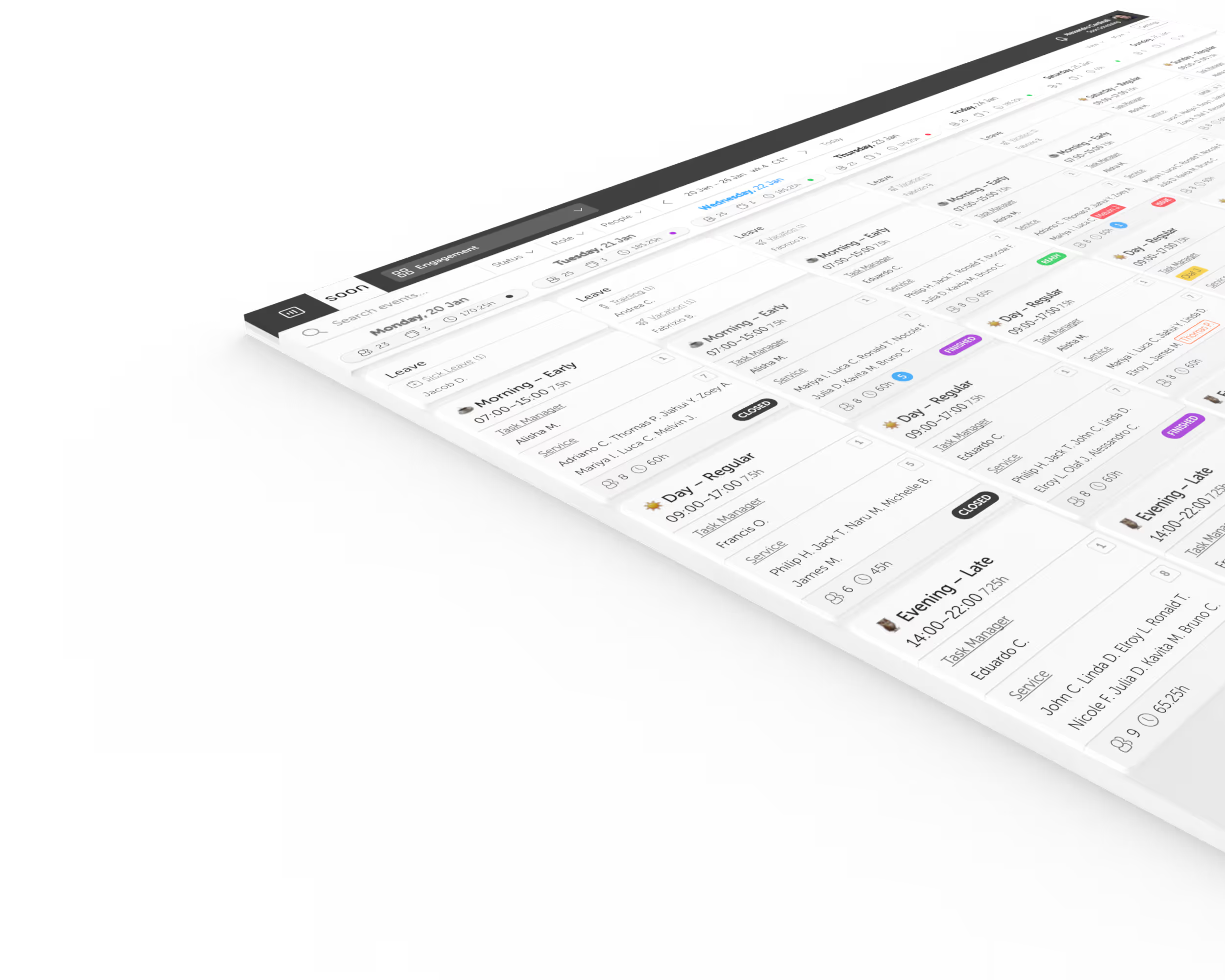
The agent count is the input; the schedule is the work. Turning 20 scheduled agents into shifts that follow your call curve, respect breaks, and survive swaps is what Soon builds automatically, with intraday coverage tracking when the forecast misses.
Frequently asked questions
- How many agents does it take to handle 1000 calls a day?
- Plan 1000 calls a day around its busiest hour. At roughly 15 percent of daily volume that hour brings 150 calls, which takes 14 agents on the phones at a 240-second handle time and an 80/20 target, against 12 for the 125-call average hour. Covering the peak takes 20 scheduled agents at 30 percent shrinkage.
- What service level do 12 or 13 agents deliver at the 150-call peak?
- Thirteen agents answer 78 percent of calls within 20 seconds, two points short of an 80/20 target. Twelve agents drop to 62 percent, which callers experience as real queueing. Fourteen clears the target with headroom, at 88 percent within 20 seconds and 71.4 percent occupancy.
- Why not put all 20 agents on the same 8-hour shift?
- Because the day is not flat. The peak hour needs 14 agents on the phones while the average hour needs 12, so identical all-day shifts either idle two agents through the quiet hours or miss the target at the peak, where staffing of 12 delivers only 62 percent within 20 seconds. Staggered starts or a part-time shift laid over the peak closes the gap without paying for it all day.
- Are split shifts worth it for 1000 calls a day?
- They are the cleanest way to cover the 14-agent peak that 1000 calls a day produces without paying a flat roster to idle through 12-agent hours. The costs are real, since split and short shifts are harder to recruit for and rota fairness needs active managing, but the alternative is two agents of structural idle time every shoulder hour. Most operations at this size decide the shaping pays for itself.
- Is the 15 percent peak-hour assumption right for my line?
- Treat it as a starting point, not a fact. Fifteen percent of 1000 calls gives the 150-call peak hour behind the 14-agent figure, but support lines differ, and your ACD interval report will show the real share. If your busiest hour carries more than 15 percent of daily volume, the peak requirement rises above 14 and the case for shaped shifts gets stronger.
Adjacent staffing questions
How many agents do you need for 500 calls a day?
The answer is 8 on the phones at peak and 12 on the schedule, but only if your day is as flat as this page assumes.
8 on phones · 12 scheduled · 80/20
See the math →How many agents do you need for 2000 calls a day?
About 25 agents on the phones at peak and 36 on the schedule, and the volume where per-day arithmetic officially hands off to interval planning.
25 on phones · 36 scheduled · 80/20
See the math →How many agents do you need for 200 calls an hour?
17 agents on the phones, 25 on the schedule, and exactly one point of margin over the 80/20 target.
17 on phones · 25 scheduled · 80/20
See the math →Your next schedule could take 2 minutes.
Import your team, set your rules, hit auto-fill. Most teams are live the same day.
30 days free · No credit card required
Already have an account?Sign in