 Healthcare
DirectRx
“Soon has enhanced our process of analyzing the hours we allocate to each activity and better allocate those resources in the future.”
Camden Hadley
Assistant Director of Operations
At a Glance
- Organization Scale: ~200 team members
- Previous Tools: Excel & Homebase
- Key Challenge: Manual data entry leading to inconsistent reporting and blind spots in staffing
- The Result: Real-time visibility into shared activities and a single source of truth for resource allocation
The Challenge: Reaching the Breaking Point of Manual Scheduling
Before adopting Soon, DirectRx managed its complex operations through a labor-intensive combination of Excel spreadsheets and Homebase. The workflow was inherently fragmented:
- Manual Planning: Each team built activity schedules in individual Excel sheets.
- Duplicate Entry: Those plans were re-entered into Homebase for an hourly view.
- Supervisors took screenshots of Homebase and sent them to staff via internal chat messages.
As the team grew, the cracks in this process became breaking points. Data between spreadsheets and the scheduling software frequently fell out of sync, and the manual nature of the work led to a lack of confidence in the data.
The Turning Point: Scaling Through Partnership
DirectRx needed a single system that could account for shared activities, where different teams collaborate on the same workflows. During onboarding, the team realized that separate schedules per department were not enough. They needed a single, unified schedule for all 200 members.
Transitioning to this scale initially pushed the Soon system beyond its original limits. However, rather than a blocker, this became a testament to the partnership between the two companies. The Soon team optimized the platform specifically for DirectRx's scale. Today, the system runs seamlessly, proving its ability to handle high-complexity enterprise workloads.
The Results: Precision, Visibility, and Confidence
With Soon fully implemented, DirectRx has moved from reactive monitoring to proactive management.
1. Real-Time Staffing Safeguards
The most impactful change has been the use of Staffing Requirements. For mission-critical activities like incoming call volume, DirectRx defines exact hourly staffing minimums. If a gap appears, Soon highlights it immediately. Supervisors can correct staffing shortages before they affect service levels or patient experience.
2. Clearer Visibility, Better Decisions
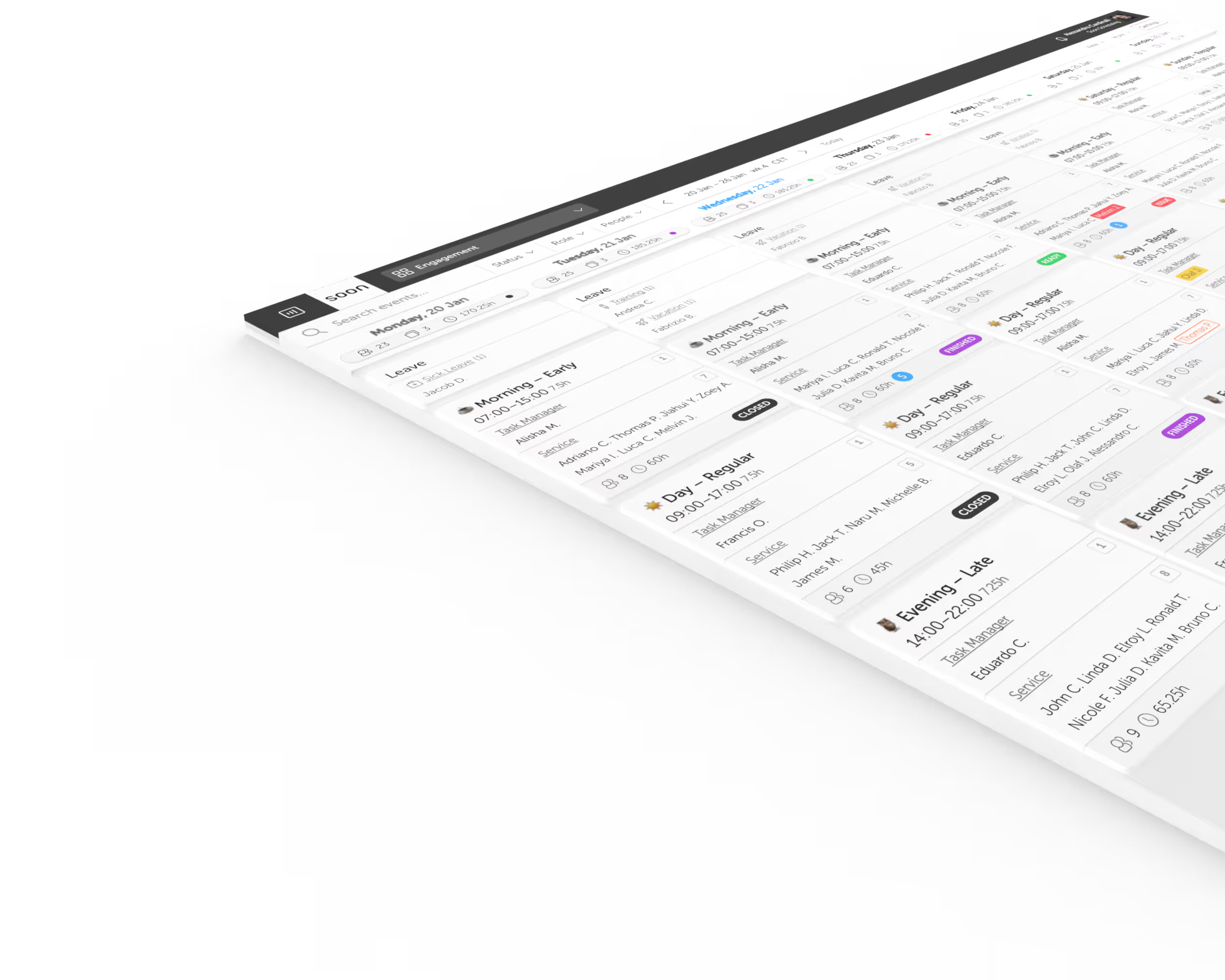
Supervisors no longer guess who is working on what. They have an instant, real-time view of resource distribution across all departments. This has significantly reduced the time spent on daily monitoring.
3. Reliable Resource Analysis
By moving away from spreadsheets, DirectRx now has a single source of truth. Exportable reports allow for deep analysis of how hours are spent, enabling the team to plan more effectively for future growth.
Looking Ahead: A Foundation for Growth
As DirectRx continues to onboard new team members, Soon has evolved from a scheduling tool into an essential pillar of organizational management. By centralizing shifts, activities, and analysis into one platform, DirectRx is now positioned to scale its services without increasing operational complexity.
Your next schedule could take 2 minutes.
Import your team, set your rules, hit auto-fill. Most teams are live the same day.
30 days free · No credit card required
Already have an account?Sign in