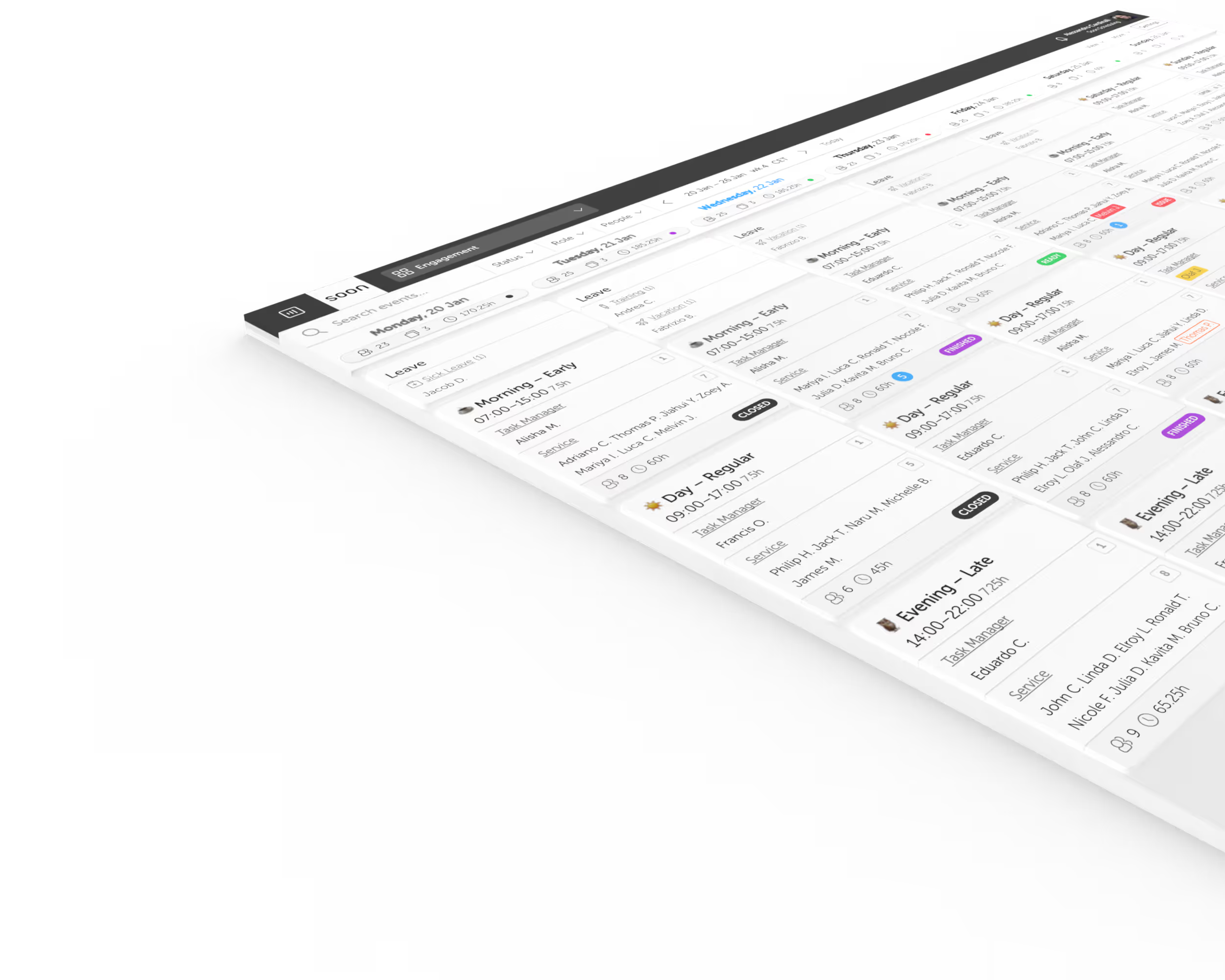
24/7 NOC Coverage Blueprint
A practical guide to building 24/7 NOC coverage that survives attrition, handoffs, fatigue, and alert volatility without living in permanent crisis mode.
Audience
NOC managers, service desk leaders, infrastructure operations managers, and technical schedulers responsible for round-the-clock coverage
Time
90 minutes for the first review, then one schedule cycle to apply changes
Before you start
Use this blueprint when
- Night coverage depends heavily on one or two senior engineers
- Voluntary overtime is masking structural staffing gaps
- Night shift escalates materially more than day shift on similar alert volume
- Handoffs feel inconsistent or risky
- You inherited a 24/7 model that nobody has re-evaluated in years
Prerequisites
- Current shift structure and team roster
- Incident or alert volume by shift
- Escalation data by time of day
- Basic absence and overtime history
- A view of what tasks and skills are required overnight
Inputs needed
- Scheduled headcount by shift
- Night versus day escalation rate
- Overtime and absence patterns
- Attrition history or vacancy risk
- Current handoff format and timing
- Critical overnight responsibilities by role
Steps
Stress-test the current model before you trust it
Use a few simple failure tests to expose whether your 24/7 coverage is actually a dependency network in disguise.
Most NOC coverage models look stable until one person is absent, resigns, or burns out. Start by asking what breaks if one key night engineer disappears from the rota. If the answer is everything, you do not have a resilient model yet.
- the sick-day test
- the voluntary overtime dependency test
- the night escalation gap test
- the six-month attrition test
Calculate real staffing, not theoretical minimum coverage
Build in the buffer your shift diagram pretends you do not need.
Theoretical minimum coverage is not the same thing as sustainable coverage. A NOC that staffs only to the clean mathematical minimum usually ends up paying the difference through fatigue, voluntary overtime, and turnover.
Build explicit allowance for PTO, sickness, training, attrition, and recovery time. For many 24/7 teams, the honest number is materially above the simple shift-count calculation.
If you cannot fund that structural buffer immediately, at least identify the exact gap instead of letting overtime hide it.
Separate coverage roles from hero knowledge
Reduce the chance that overnight continuity depends on one person's judgment or memory.
A stable 24/7 NOC requires more than names on shifts. It requires that essential overnight tasks, escalation authority, and troubleshooting context are distributed across the team rather than concentrated in one expert.
List the responsibilities that are effectively hero-owned today, then decide how those can be documented, trained, shared, or moved into better tooling.
Treat handoff quality as a core coverage mechanism
A weak handoff erases capacity because every shift has to rediscover context.
24/7 coverage is not just about who is present. It is also about what survives the shift change. Pair this blueprint with the dedicated NOC shift handoff playbook and the live handover checklist so key incident state, judgment, and risks cross the shift boundary cleanly.
If the day shift repeatedly starts by rediscovering the same incident context, your team is paying for that missing handoff every single day.
Use escalation rate as a diagnostic, not a blame signal
Night-shift escalation behavior often tells you where coverage, tooling, or context is thin.
If night shift escalates materially more than day shift on comparable alert load, interpret that as evidence. It may reflect staffing thinness, weaker tooling, weaker runbooks, or missing transfer context. It is usually not just a night-team quality problem.
Track the gap by alert category so you can tell whether the problem is broad or clustered into a few recurring issue types.
Reduce fatigue dependency in the schedule design
A coverage model that depends on the most conscientious people saying yes too often is already breaking.
A stable 24/7 model should not depend on repeated voluntary overtime from the same engineers. Review whether your current shift rotation is distributing load fairly and preserving recovery time.
Review the model on a fixed cadence, not only after a crisis
Coverage models decay quietly when headcount, tooling, and alert behavior change.
Revisit the coverage model quarterly or after any major shift in team size, tooling, or alert patterns. Use a shared coverage template to document the assumptions you are running on, so they stay visible before they become brittle.
Implementation checklist
0/7This blueprint is designed as the hub for a 24/7 operations coverage system. Keep it close to your runbooks, handoff rituals, and the wider resources library that supports day-to-night continuity.
The goal is not perfect staffing. It is building a model that can absorb normal shocks without needing heroic effort to survive them.