Skip to content
Solutions

Why high performers are faster than others, and what teams usually miss about it

Managers often notice that top performers move through the same shift or queue much faster than everyone else. The mistake is assuming the answer is only effort. In many cases, they work with clearer routines, lower friction, better judgment, or a more usable slice of the workflow.

  • Top performers handle more comparable work in the same time
  • They generate less rework and fewer avoidable escalations
You might have asked

“Some people just seem to glide through the day.”

“I want to understand the pattern, not just praise the person.”

“If the best people are faster, what are they doing differently?”

What this usually means

What this search usually means in real life

High performers usually combine skill and system advantage. They know how to sequence work, avoid unnecessary rework, escalate faster, and protect focus better than others. Sometimes they also benefit from better queue quality or stronger manager support.

That means the team can learn from them, but only if you study the workflow around their performance too.

Top performers handle more comparable work in the same time

They generate less rework and fewer avoidable escalations

They recover from interruptions faster

Their routines are visible to them but not to the wider team

Managers celebrate the outcome without capturing the method
Where it breaks

What is probably going wrong

The best gains usually come from separating what is teachable from what is environmental. Some speed comes from experience. Some comes from cleaner process and better working conditions that others could also benefit from.

If you only label someone a star, you miss the operating lesson.

Top performers handle more comparable work in the same time

They generate less rework and fewer avoidable escalations

They recover from interruptions faster

Their routines are visible to them but not to the wider team

Managers celebrate the outcome without capturing the method

What to fix

What to fix first

Most teams do not need a dramatic overhaul first. They need a cleaner operating loop so planning, changes, and execution stop fighting each other.

Compare high-performer workflows step by step with average performers

Look at rework, interruptions, and queue quality differences

Turn strong routines into team standards where appropriate

Protect focused time so good habits can actually stick

Fix process friction that drags everyone except the most experienced people down

Read this next

Where Soon helps

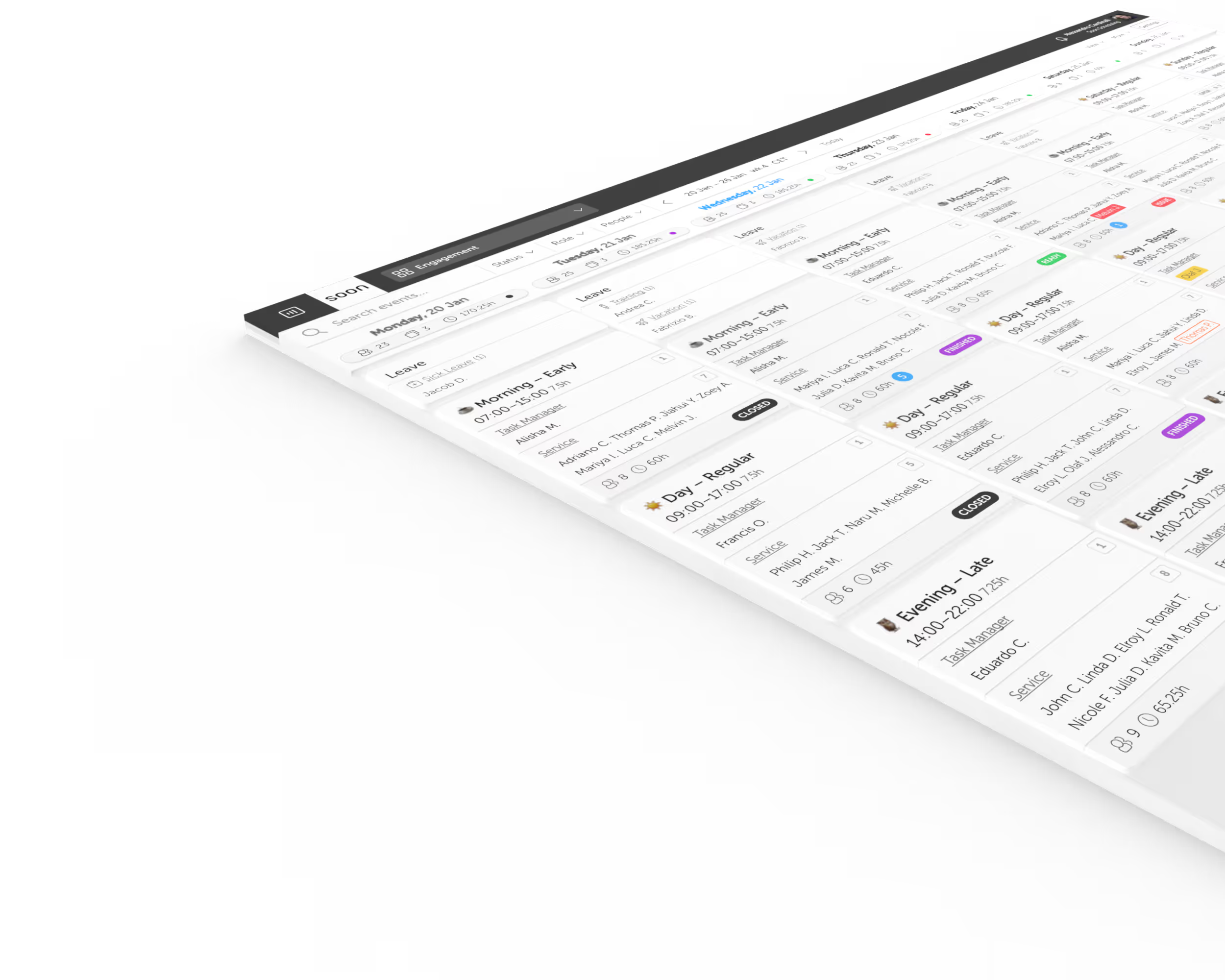
Soon helps teams see whether speed came from better planning, better focus conditions, or different workload shape. That makes it easier to spread useful habits and remove the friction slowing everyone else down.

The goal is not to clone one person. It is to make strong performance easier for the whole team.

Read next

Keep going with the pages that matter most here

If this problem sounds familiar, these are the next places worth reading.

FAQ

A few questions that usually come next

Are high performers faster mainly because they work harder?

Sometimes, but not only. Better routines, lower rework, fewer interruptions, and stronger judgment often explain a lot of the gap.

How can teams learn from high performers without oversimplifying?

Study their workflow, not just their output. Identify what is teachable, what depends on experience, and what requires process changes around them.

Your next schedule could take 2 minutes.

Import your team, set your rules, hit auto-fill. Most teams are live the same day.

Try Soon free

30 days free ยท No credit card required

Already have an account? Sign in