Skip to content
Solutions

Where does employee time actually go during the workday?

If your team is present all day but output still feels thin, the missing answer is usually not โ€œpeople are doing nothing.โ€ It is more often that time is getting chewed up by interruptions, waiting, handoffs, and admin work nobody planned for.

  • Frequent task switching across the shift
  • Too much status chasing and manual coordination
You might have asked

“People are busy all day, but it is hard to point to what moved.”

“The shift disappears faster than the real work does.”

“I need to understand where usable time is leaking out.”

What this usually means

What this search usually means in real life

Managers often ask this when the day feels oddly slippery. There is motion everywhere, but not much clear progress. That is a classic sign that the team has too much fragmented work and too little visibility into what is consuming the hours.

The answer is usually spread across workflow, staffing, and interruption patterns.

Frequent task switching across the shift

Too much status chasing and manual coordination

Queues stop and start because people are waiting on each other

Exception work keeps pushing planned work aside

Managers rely on anecdotes because they do not have a usable view of the day
Where it breaks

What is probably going wrong

A workday can lose huge amounts of time without any dramatic failure. Small delays compound: one missing input, one unplanned meeting, one queue spike, one rework loop.

To fix that, you need to see how work moves inside the day, not just how many hours were scheduled.

Frequent task switching across the shift

Too much status chasing and manual coordination

Queues stop and start because people are waiting on each other

Exception work keeps pushing planned work aside

Managers rely on anecdotes because they do not have a usable view of the day

What to fix

What to fix first

Most teams do not need a dramatic overhaul first. They need a cleaner operating loop so planning, changes, and execution stop fighting each other.

Map where people are switching tasks or waiting most often

Separate planned work from exception and admin work

Use intraday views to spot pressure shifts early

Protect focused work blocks for high-value tasks

Review repeated time leaks weekly so they become process improvements, not daily frustration

Read this next

Where Soon helps

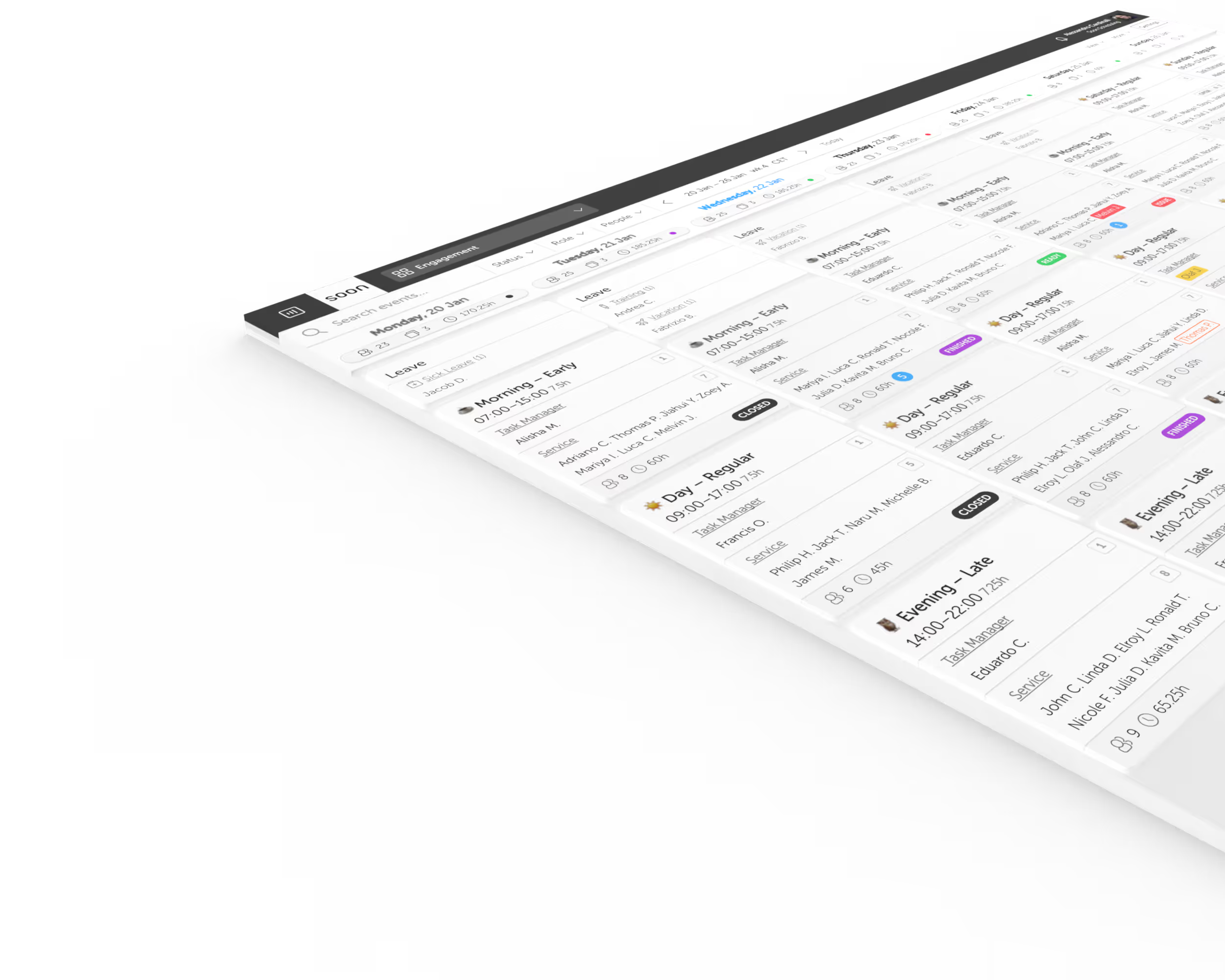
Soon gives teams a clearer view of where the workday gets consumed. When workload, coverage, and intraday changes are visible, it becomes easier to tell whether lost time came from staffing gaps, poor sequencing, or too much reactive work.

That is much more actionable than simply knowing the shift started and ended on time.

Read next

Keep going with the pages that matter most here

If this problem sounds familiar, these are the next places worth reading.

FAQ

A few questions that usually come next

What are the biggest hidden drains on a workday?

Context switching, waiting for handoffs, exception handling, and repeated admin work are usually bigger drains than people realize.

How can teams see where time is going without micromanaging?

Look at workflow patterns, interruptions, and queue movement. That reveals time loss without needing invasive monitoring.

Your next schedule could take 2 minutes.

Import your team, set your rules, hit auto-fill. Most teams are live the same day.

Try Soon free

30 days free ยท No credit card required

Already have an account? Sign in