Skip to content
Solutions

How to track employee hours automatically without creating more friction

Most teams asking this are not trying to spy on staff. They are trying to stop chasing timesheets, reduce payroll errors, and understand where scheduled time and actual work drift apart.

  • Managers approve hours based on memory or chat messages
  • Payroll corrections happen every cycle
You might have asked

“We are still fixing hours manually at the end of the week.”

“People are working, but the records are messy.”

“I need better visibility, not a culture of suspicion.”

What this usually means

What this search usually means in real life

Automatic hour tracking sounds like a time-clock question, but it is usually a workflow question. If schedules, attendance, and day-of changes do not line up, the team spends too much time correcting records after the fact.

Automation helps most when it removes manual reconciliation and makes exceptions obvious early.

Managers approve hours based on memory or chat messages

Payroll corrections happen every cycle

Late starts, early finishes, and coverage gaps are hard to spot

Employees do not trust the final hour totals

No one can tell whether the issue was attendance, bad planning, or a schedule change
Where it breaks

What is probably going wrong

The biggest failure mode is separating time records from the planned schedule. When the actual workday changes but the system does not, admin piles up at the end of the week.

Automatic tracking works best when it is part of the same operational flow as scheduling and exceptions.

Managers approve hours based on memory or chat messages

Payroll corrections happen every cycle

Late starts, early finishes, and coverage gaps are hard to spot

Employees do not trust the final hour totals

No one can tell whether the issue was attendance, bad planning, or a schedule change

What to fix

What to fix first

Most teams do not need a dramatic overhaul first. They need a cleaner operating loop so planning, changes, and execution stop fighting each other.

Connect planned shifts with actual attendance so discrepancies stand out fast

Flag exceptions automatically instead of cleaning everything up later

Give employees a clear place to confirm or question recorded hours

Use approvals for exceptions, not for every normal shift

Review repeated mismatch patterns to improve scheduling, not just payroll

Read this next

Where Soon helps

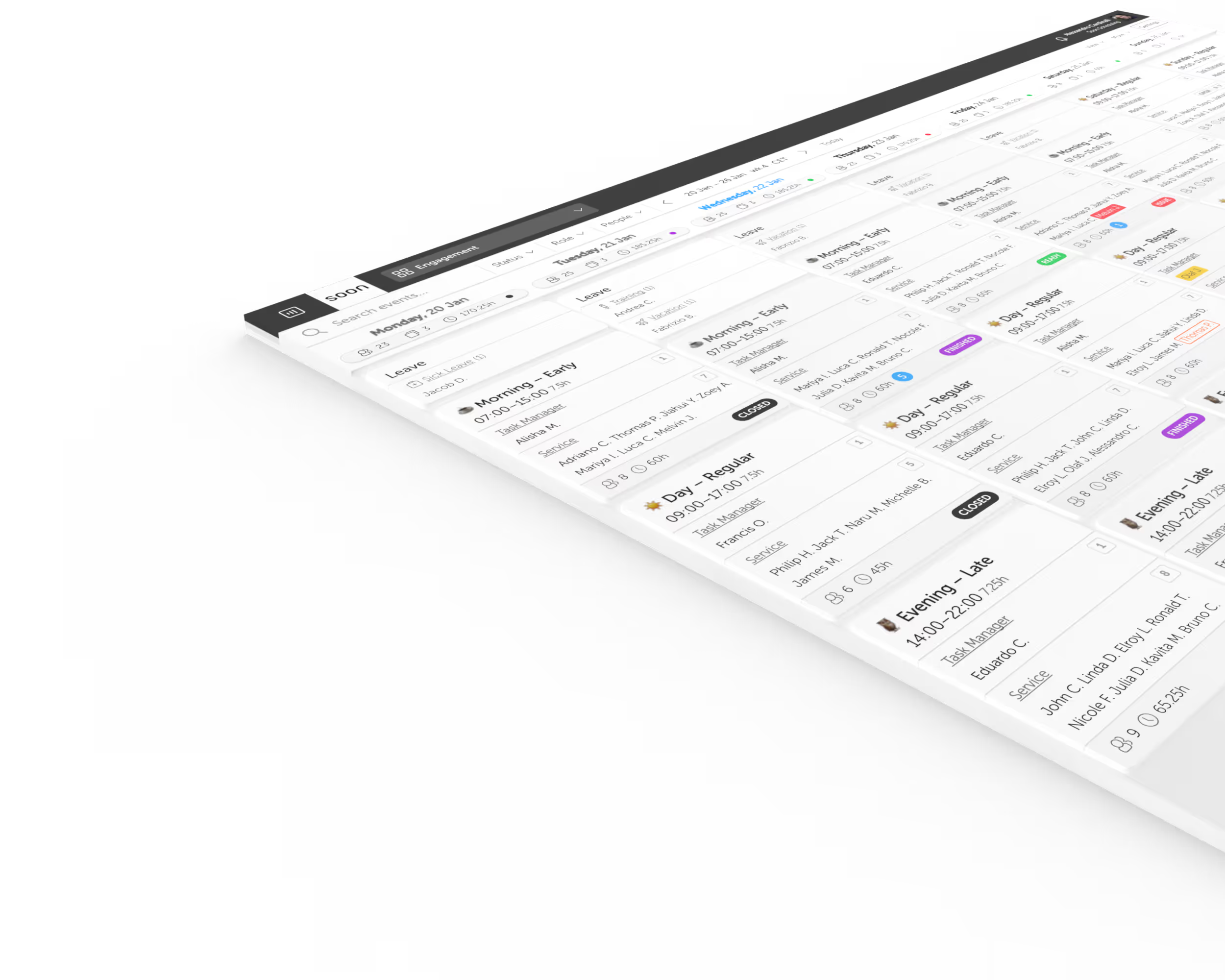
Soon is strongest when teams want time visibility tied back to the schedule. That makes it easier to understand whether missing hours came from absence, bad coverage planning, or work that moved during the day.

The result is less end-of-week cleanup and better operational visibility while the week is still happening.

Read next

Keep going with the pages that matter most here

If this problem sounds familiar, these are the next places worth reading.

FAQ

A few questions that usually come next

What is the main benefit of automatic hour tracking?

It reduces manual reconciliation. Managers spend less time fixing records, and exceptions are easier to catch while they still matter.

Should hour tracking be separate from scheduling?

Usually no. When those workflows are disconnected, teams lose context on why recorded hours and planned hours differ.

Your next schedule could take 2 minutes.

Import your team, set your rules, hit auto-fill. Most teams are live the same day.

Try Soon free

30 days free ยท No credit card required

Already have an account? Sign in