Why Task Boards Fail as Workforce Management for Support Teams
A practical guide to the gap between task management and workforce management, and how support teams know when boards, cards, and comments are no longer enough to run coverage.
Audience
Support leaders, service desk managers, and operations owners still using task boards to coordinate staffing and coverage
Time
45 minutes to assess the workflow, then one operating cycle to implement the fixes
Before you start
Use this blueprint when
- Your team uses Trello or another task board to coordinate shifts, handoffs, and coverage changes
- You can track work items but still struggle to see live availability and role coverage
- Managers rely on comments, side messages, and manual follow-up to keep the day running
- Service levels, handoffs, or intraday changes are getting harder to manage as the team grows
- You need to understand whether the problem is the board, the workflow, or both
Prerequisites
- A current view of how the team tracks tasks, shifts, and day-of changes
- Examples of recent coverage misses or handoff confusion
- Clarity on who owns queue, shift, and intraday decisions
- Willingness to separate task visibility from staffing visibility
Inputs needed
- Current task-board workflow
- Shift schedule or availability process
- Recent examples of swaps, absences, or queue spikes
- Service-level, backlog, or coverage pain points
- Handoff process between shifts or specialist groups
Steps
Separate task tracking from coverage tracking
A board can show what needs doing without showing whether the team is actually covered to do it.
Task boards are good at status, ownership, and workflow stages. They are weak at time-bound coverage, intraday visibility, and answerable questions like who is actually available right now, which role is uncovered, or how a swap affects the rest of the day.
Audit the manual work happening around the board
The real cost of using a task board for workforce management is usually hidden in side-channel coordination.
List the extra steps your managers or team leads perform outside the board: chasing confirmations, resolving shift conflicts, checking who is on break, validating queue coverage, or patching holes after a callout. That hidden work is usually the signal that task management has outgrown its job.
Create a separate live staffing view
The team needs a visible answer to coverage, not another card column.
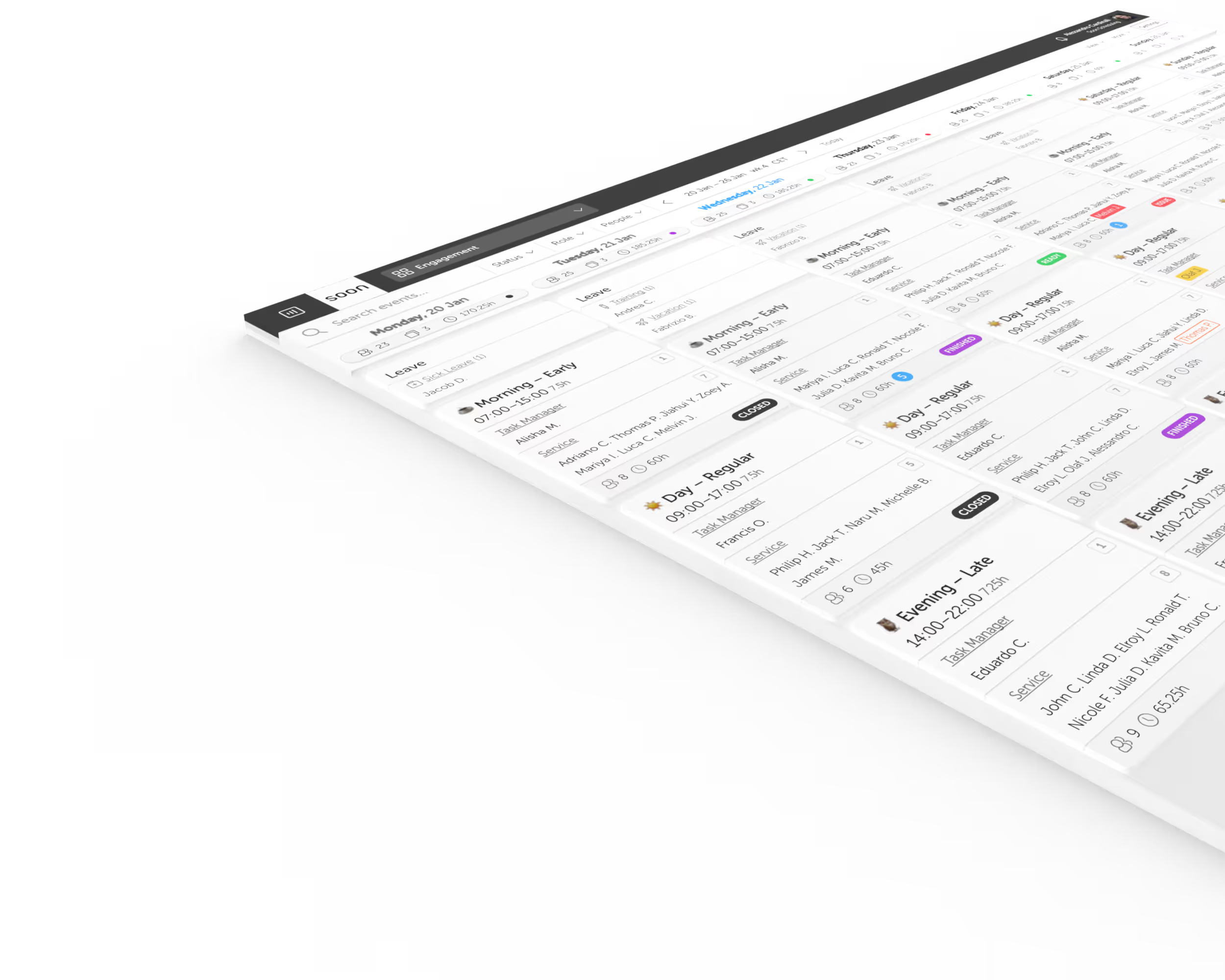
Even if the team keeps the task board for workload coordination, it needs a separate staffing view for live availability, shift ownership, and intraday changes. That is where the difference between task tracking and real-time adherence becomes operationally visible.
Standardize handoffs and day-of changes
Boards create ambiguity when multiple people edit work status but nobody owns the operating handoff.
If your team works in shifts, document who hands off what, when the shift is considered transferred, and where unresolved work lives. The same logic in the NOC handoff blueprint applies to support teams using boards as a crutch for operational continuity.
Decide whether you need better scheduling or true WFM
Not every board-heavy team needs full WFM immediately, but many need more than task management.
Some teams only need a proper scheduling layer. Others need forecasting, intraday control, and channel-aware staffing. Use the support-team WFM blueprint to decide how far beyond the board you actually need to go.
Implementation checklist
0/6Task boards often survive too long as workforce tools because they are easy to adopt and visually reassuring. But once coverage, schedules, and handoffs start to matter, the operational gaps show up in side messages, manager intervention, and missed context.
The right move is usually not to throw the board away. It is to stop pretending that task visibility equals staffing visibility, then add the scheduling and intraday structure the operation actually needs.